Welcome to the exhibition “Roald Dahl and Quentin Blake: A Splendiferous Collaboration”, produced by CRC Innova, conceived and curated by CUADRI ETS, in collaboration with The Roald Dahl Museum and Story Centre and Quentin Blake.
ROOM 1 – ROALD DAHL AND QUENTIN BLAKE’S MARVELLOUS WORLD
The first room introduces the world created through the collaboration between two very different artists: Roald Dahl, a writer, and Quentin Blake, an illustrator.
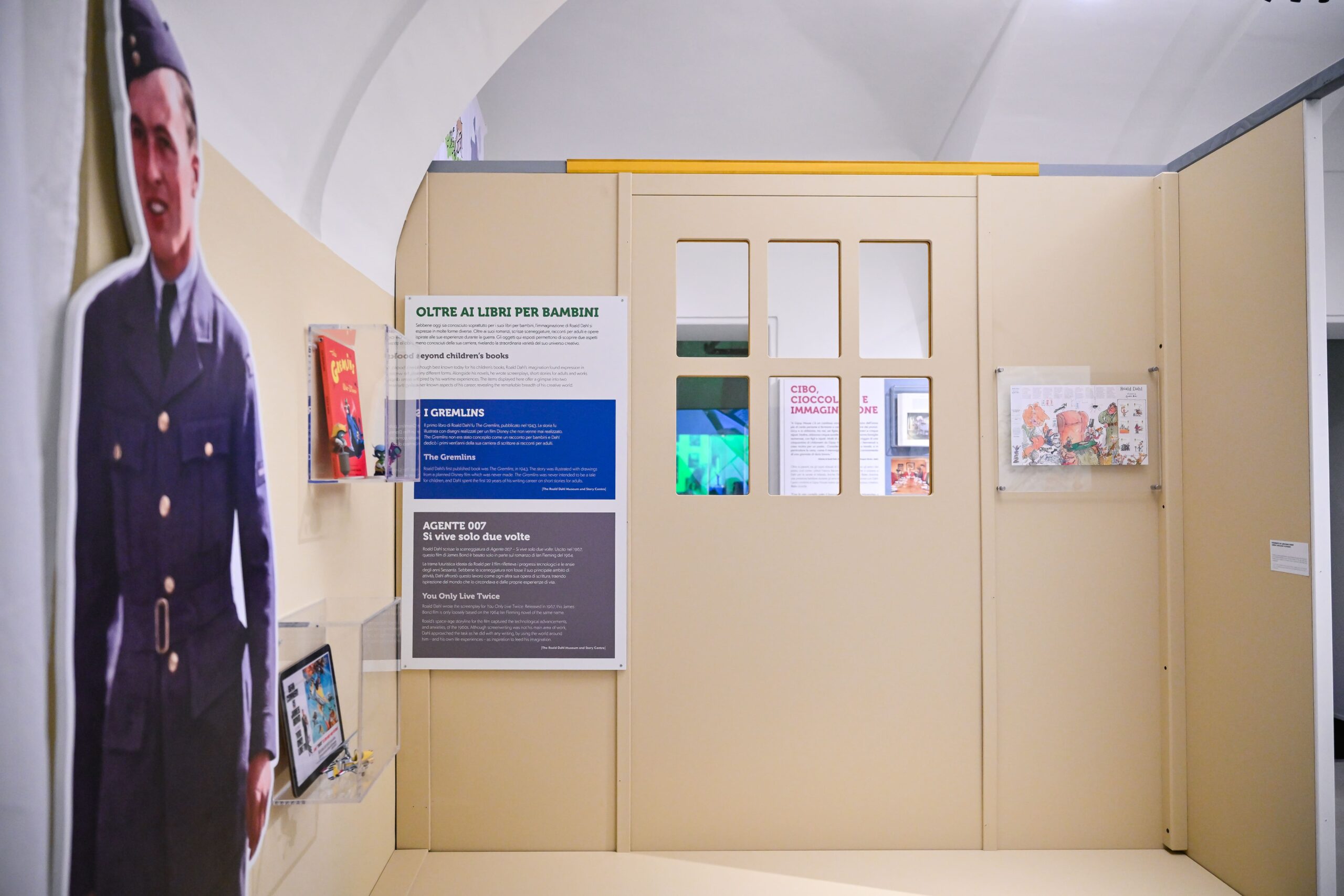
Roald Dahl is one of the world’s best-known and most beloved children’s authors. Before becoming a writer, he lived through many adventures: during the Second World War, he was a Royal Air Force fighter pilot and later worked for the British Embassy in Washington.
Quentin Blake is one of Britain’s most celebrated illustrators. He has illustrated more than five hundred books and has received numerous awards and honours. His style is immediately recognisable for its quick lines and highly expressive faces.
Dahl and Blake met in 1976, in a publisher’s office. That first meeting marked the
beginning of a collaboration that lasted until Dahl’s death in 1990.
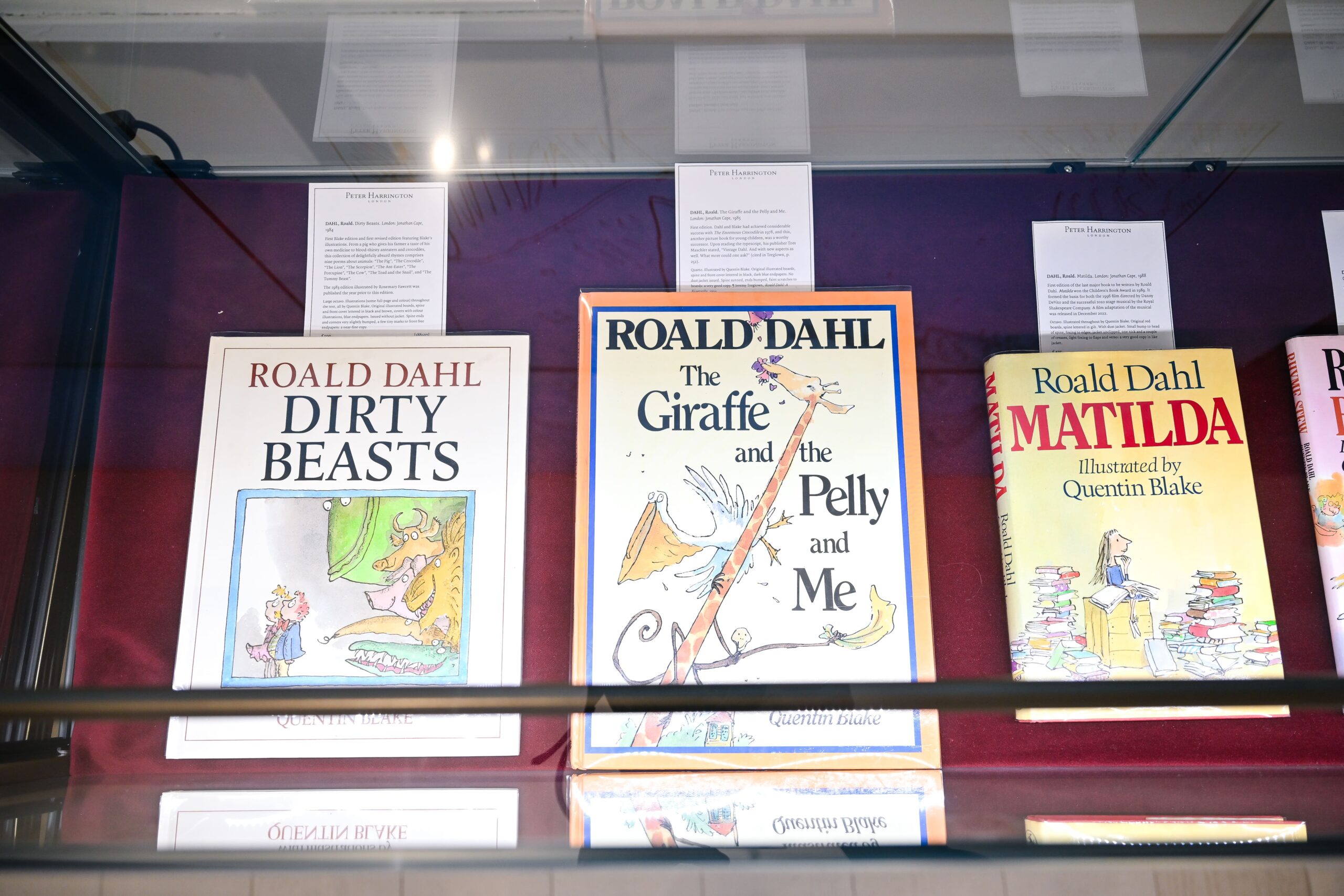
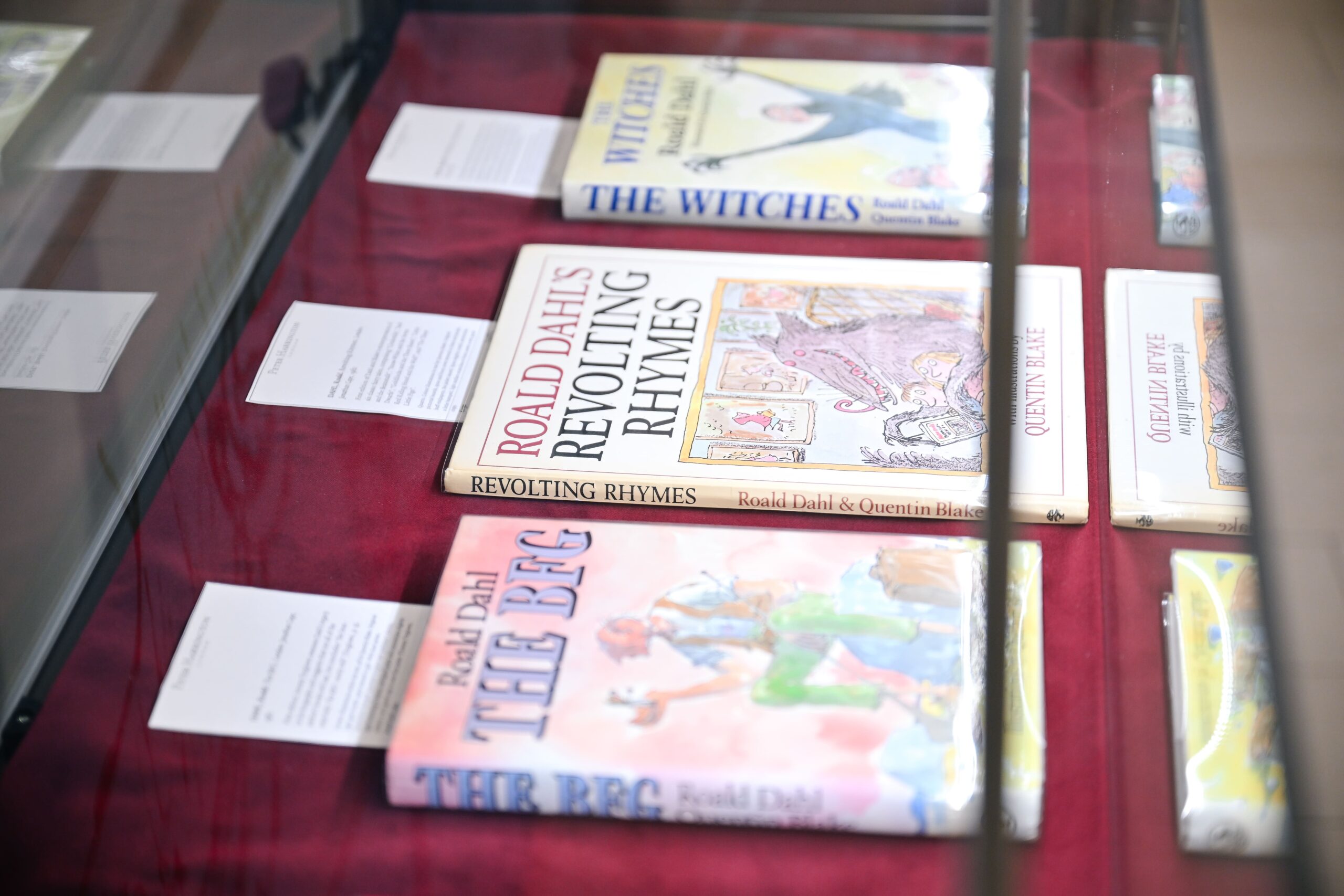
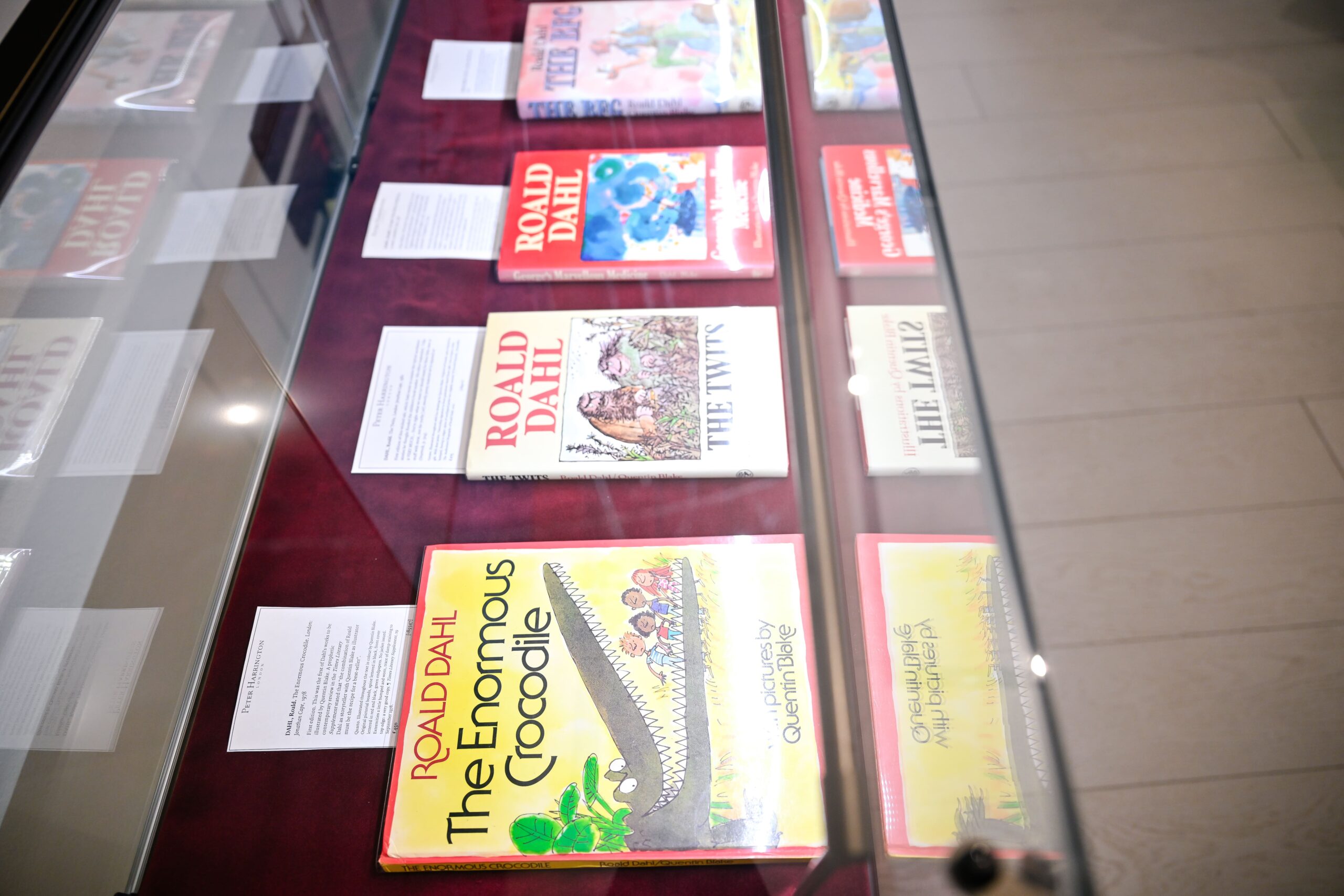
The first book by Dahl illustrated by Blake was The Enormous Crocodile, followed by The Twits. Their collaboration then continued with The BFG, the book that marked the beginning of a true creative dialogue between the two.
A video tells the story of their collaboration
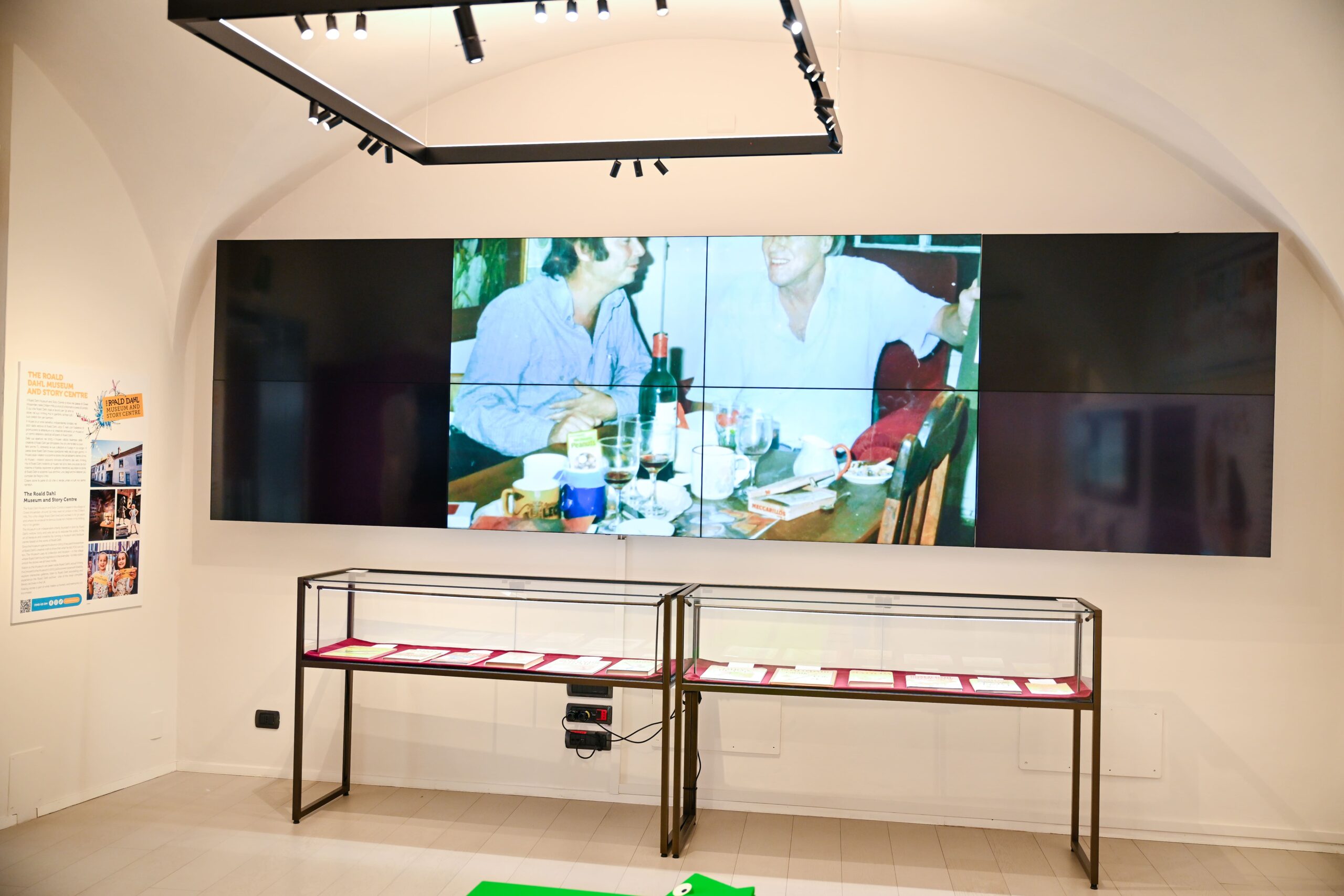
On one wall, a video tells the story of the collaboration between Dahl and Blake, from their meeting to the way they gradually learned to work together.
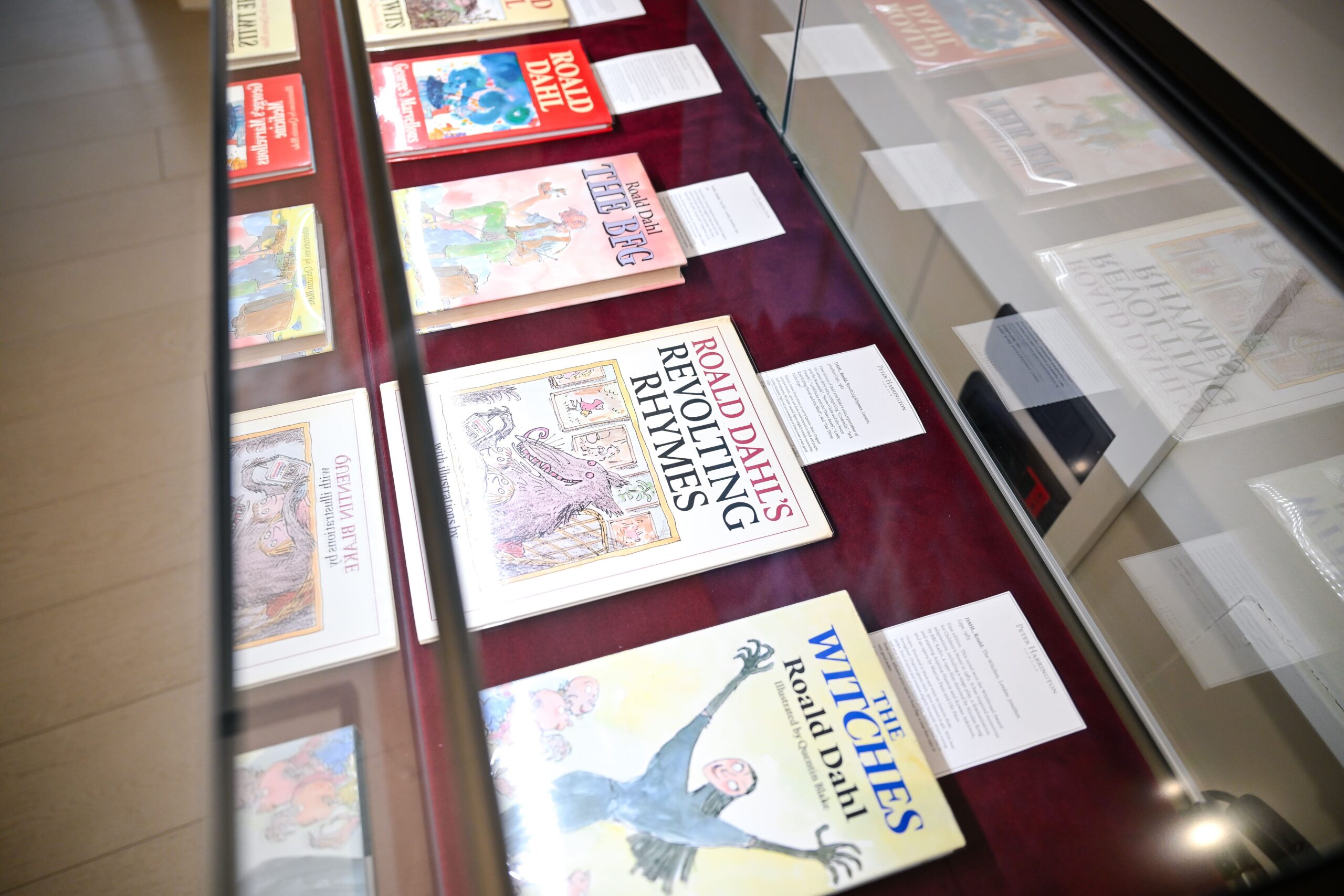
Below the video are first English editions of Dahl’s books illustrated by Blake.
The illustrations
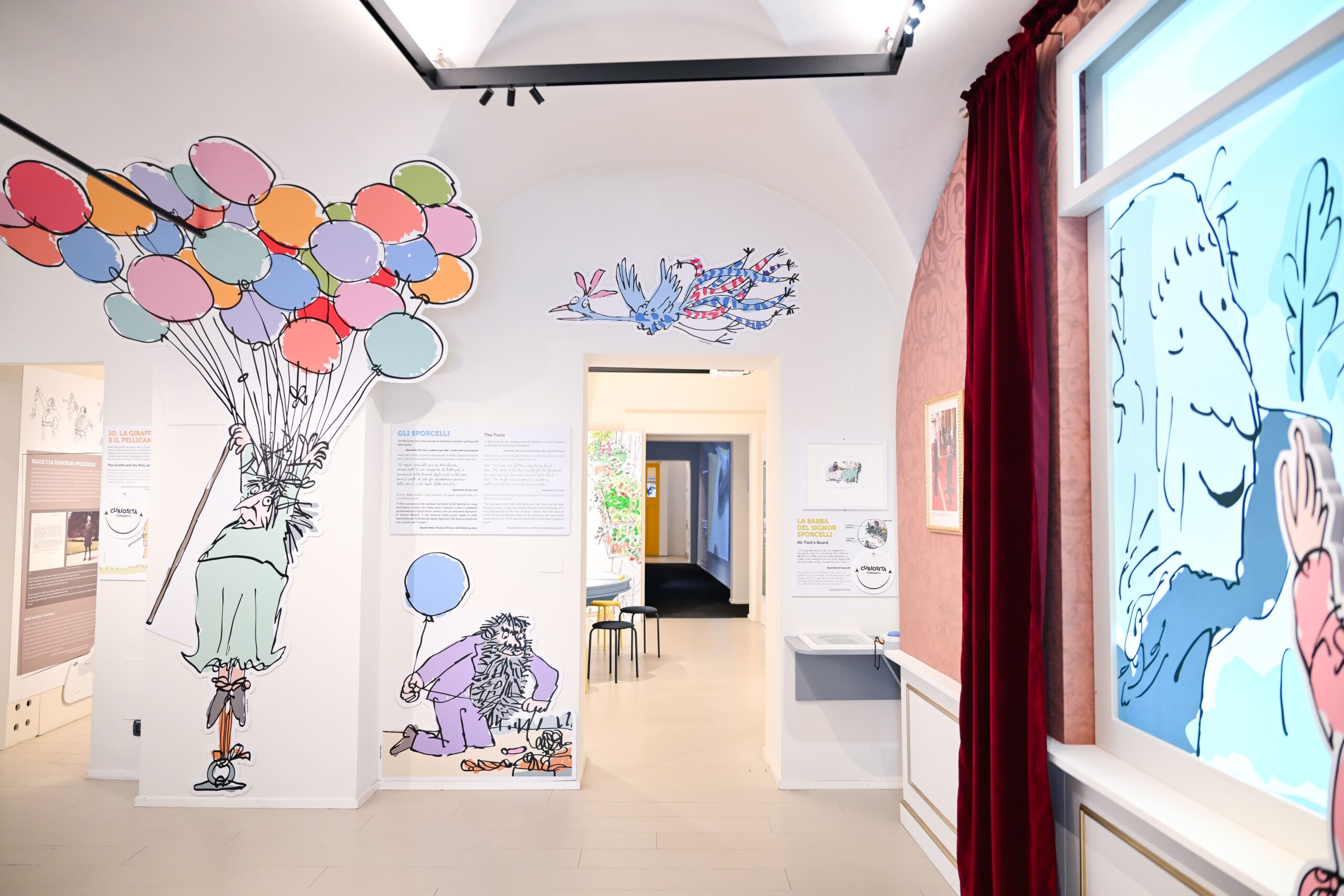
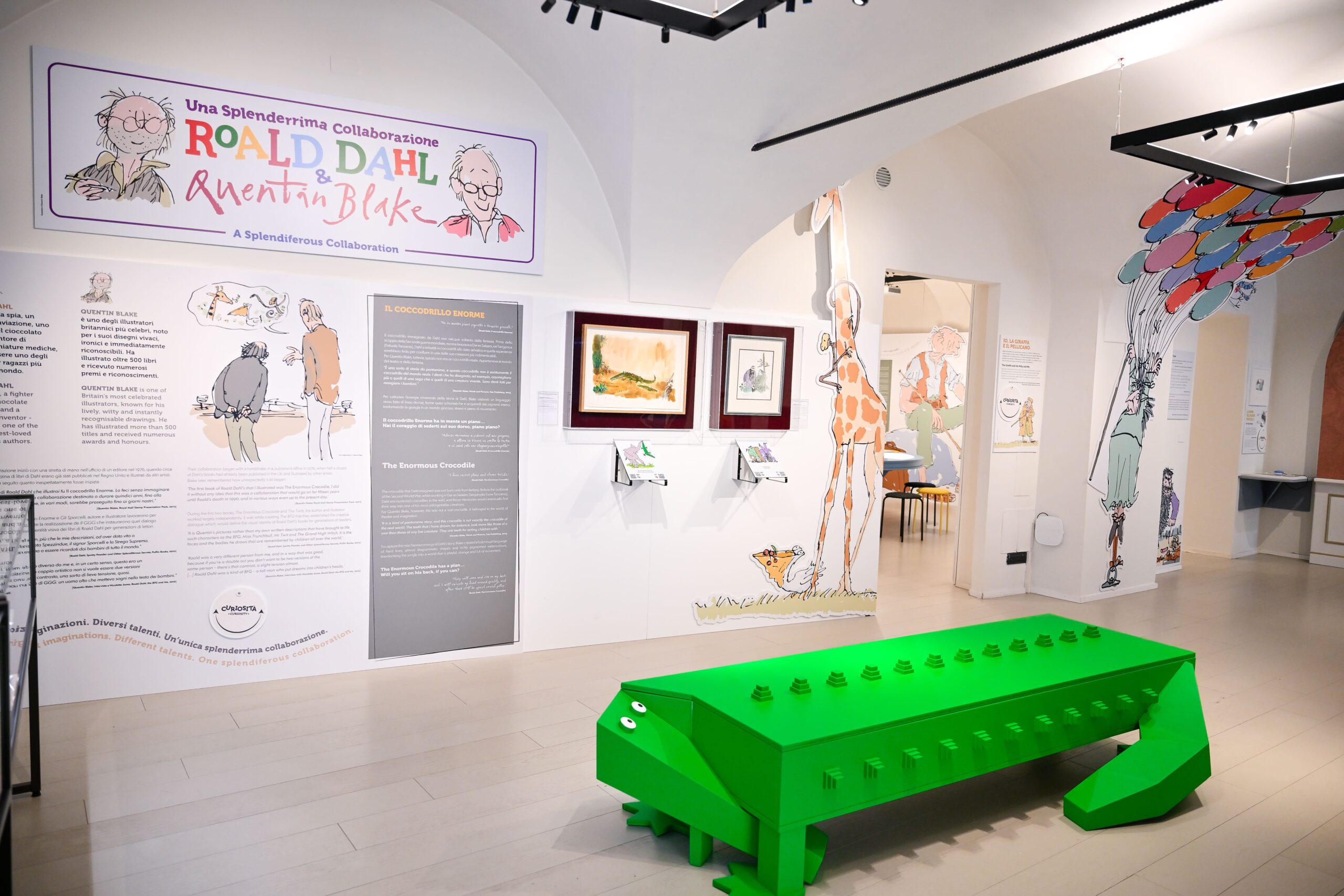
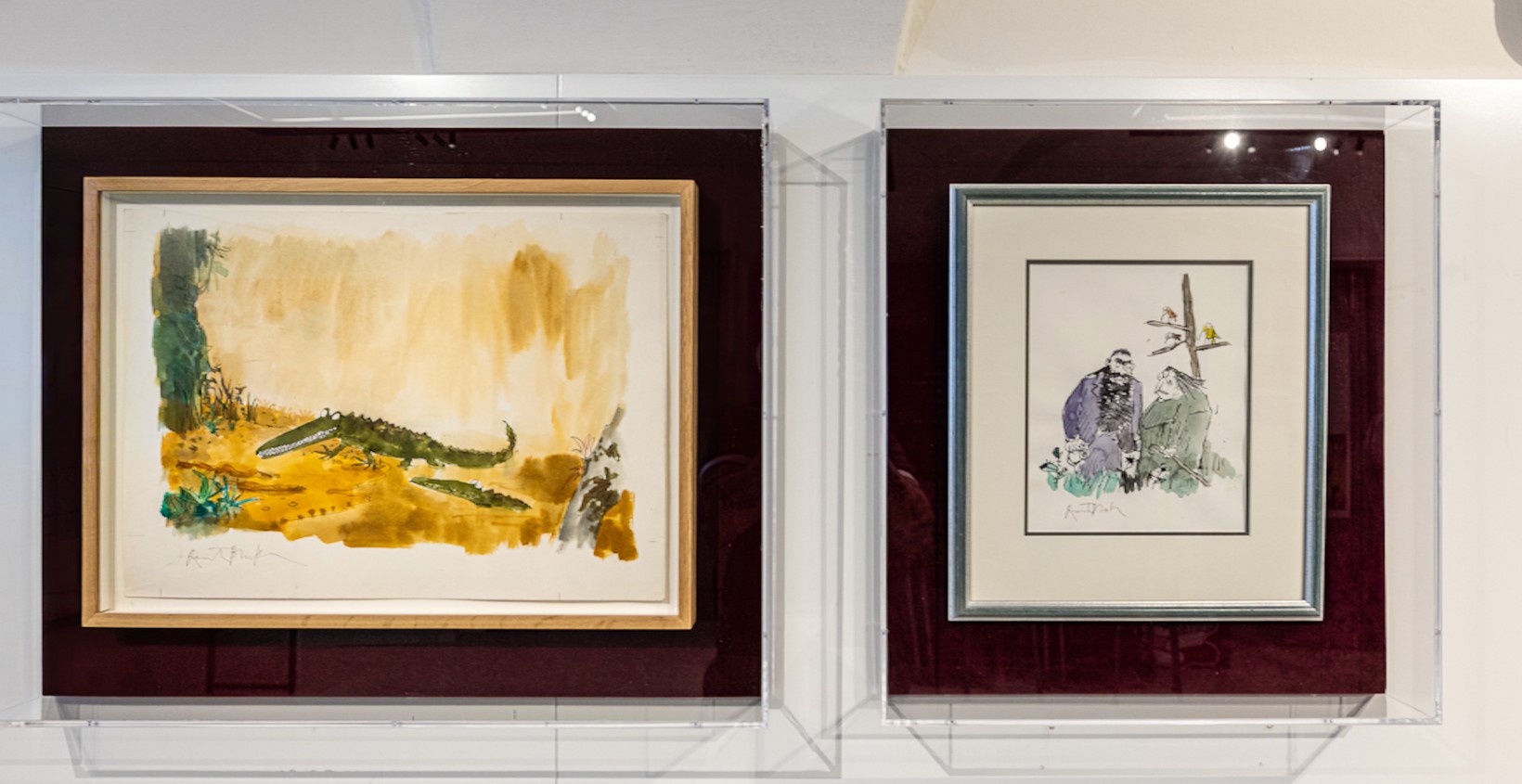
The room displays reproductions of Quentin Blake’s illustrations on the walls, but particular attention should be paid to the two original artworks: one from The Enormous Crocodile and the other from The Twits.
The works are on loan from the Peter Harrington collection in London, one of the world’s most important antiquarian booksellers.
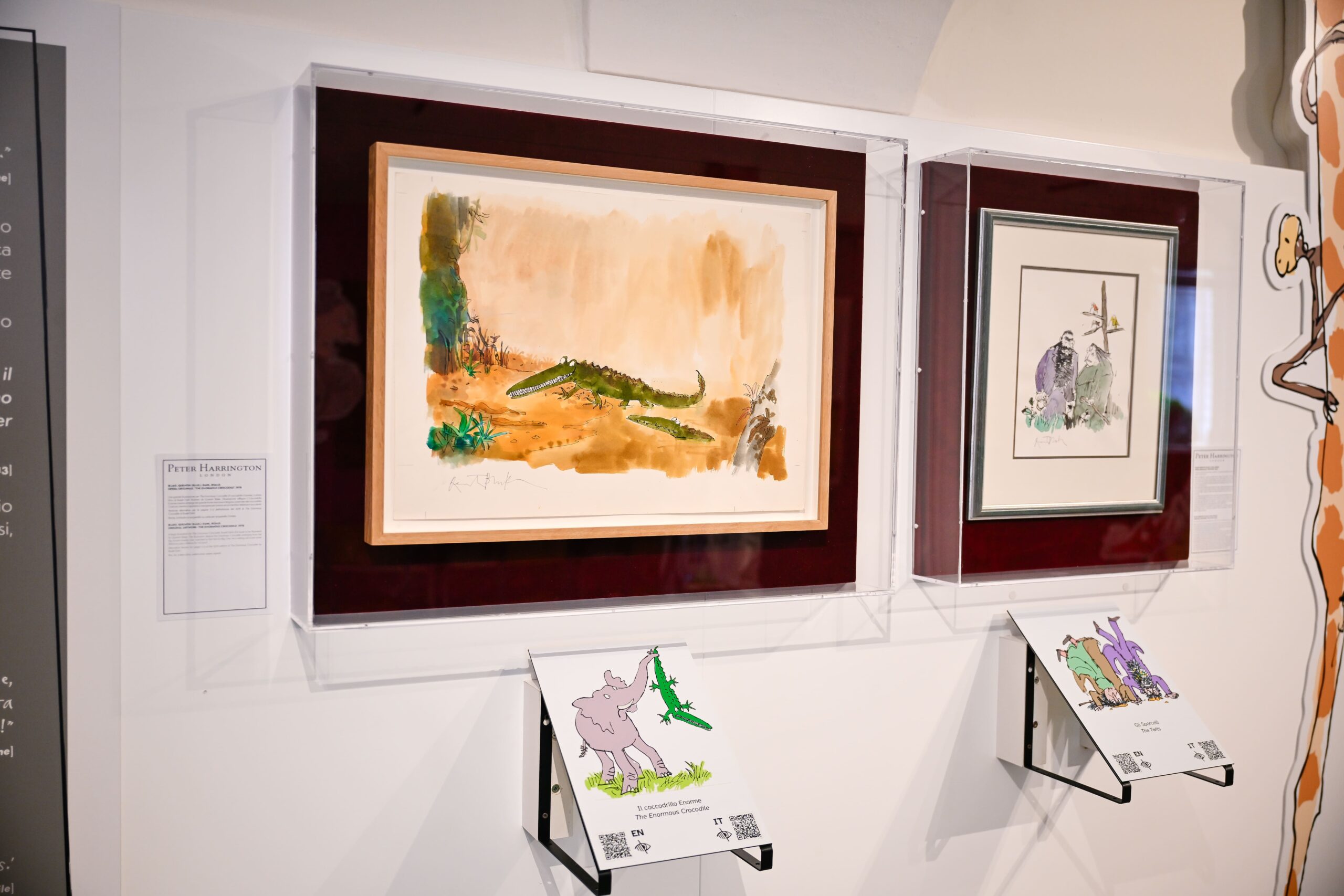
The Enormous Crocodile
One section of the room is dedicated to The Enormous Crocodile, the story of a huge African crocodile who dreams of eating children and constantly invents new tricks to do so.
Dahl had seen crocodiles when he was working in Dar es Salaam, in what was then Tanganyika, now Tanzania. Blake immediately realised, however, that Dahl’s crocodile was not a real crocodile: it was a caricature-like character, with a large mouth and hundreds of sharp teeth that make him both threatening and funny.
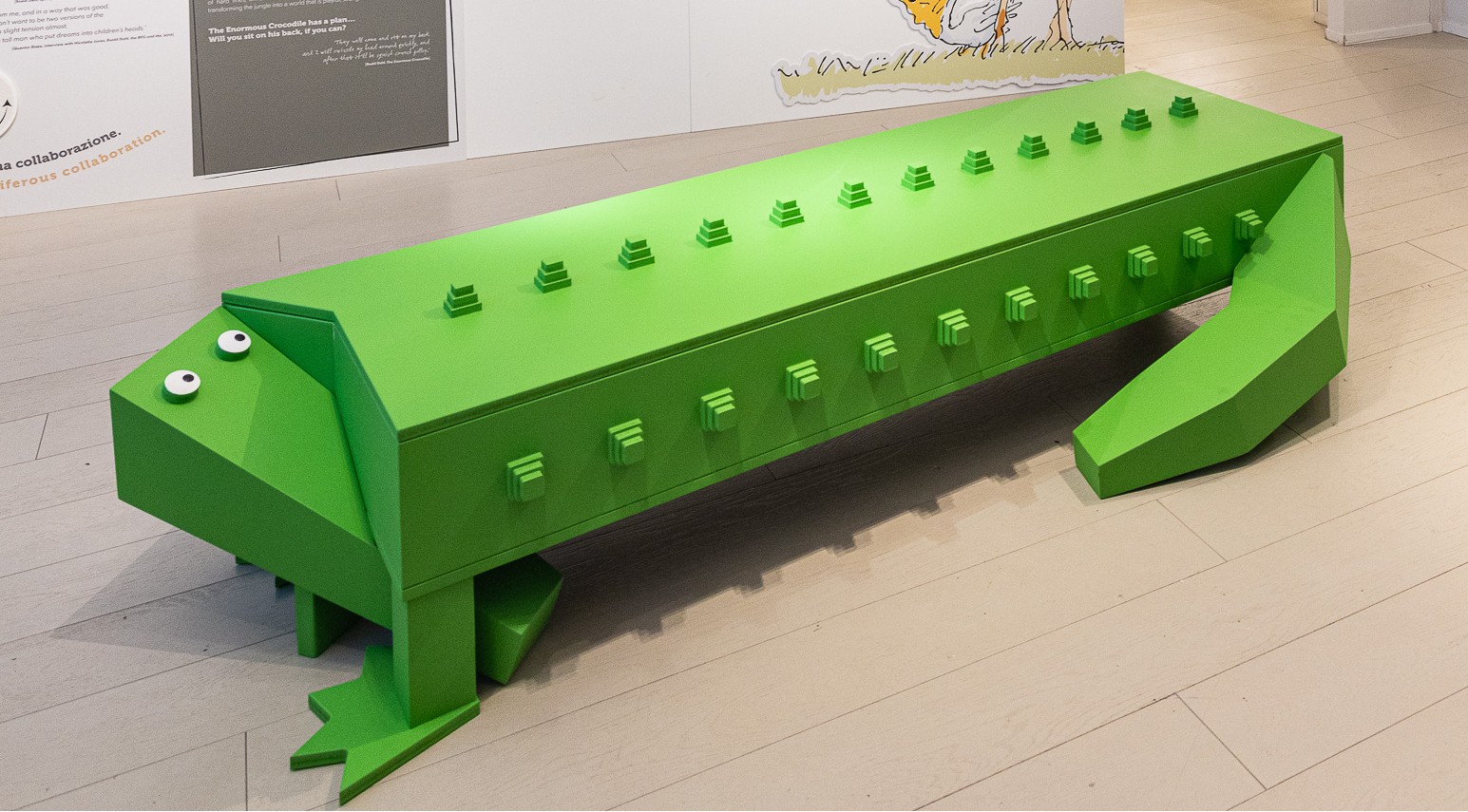
The Enormous Crocodile bench
The room also contains a large crocodile-shaped bench, loosely inspired by the Enormous Crocodile in the book. Visitors can sit on the animal’s back.
The three-dimensional installation creates an interesting contrast with the two-dimensional illustrations on the walls.
The Twits
Another unforgettable character is Mr Twit, who, together with his wife, is one of the protagonists of The Twits.
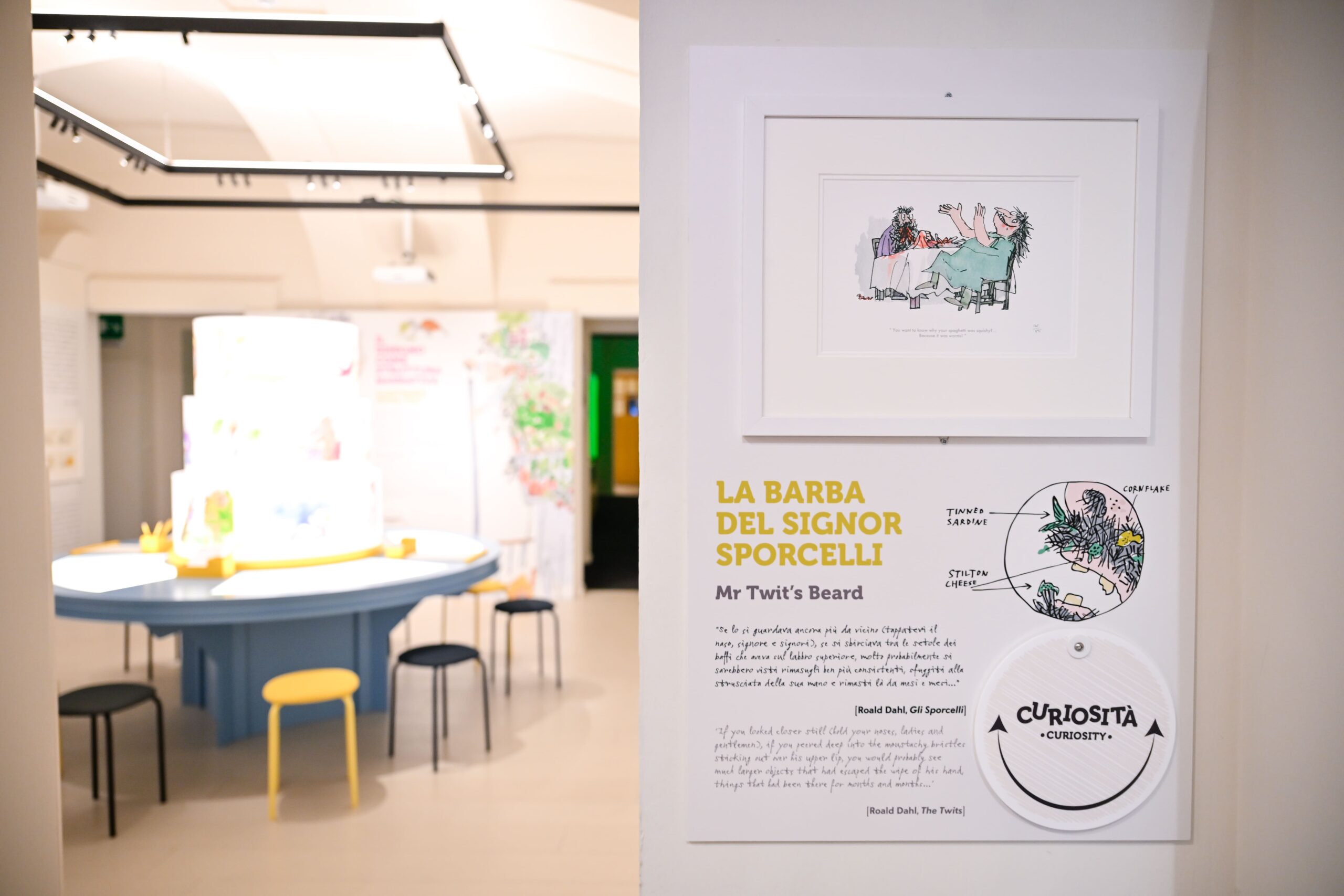
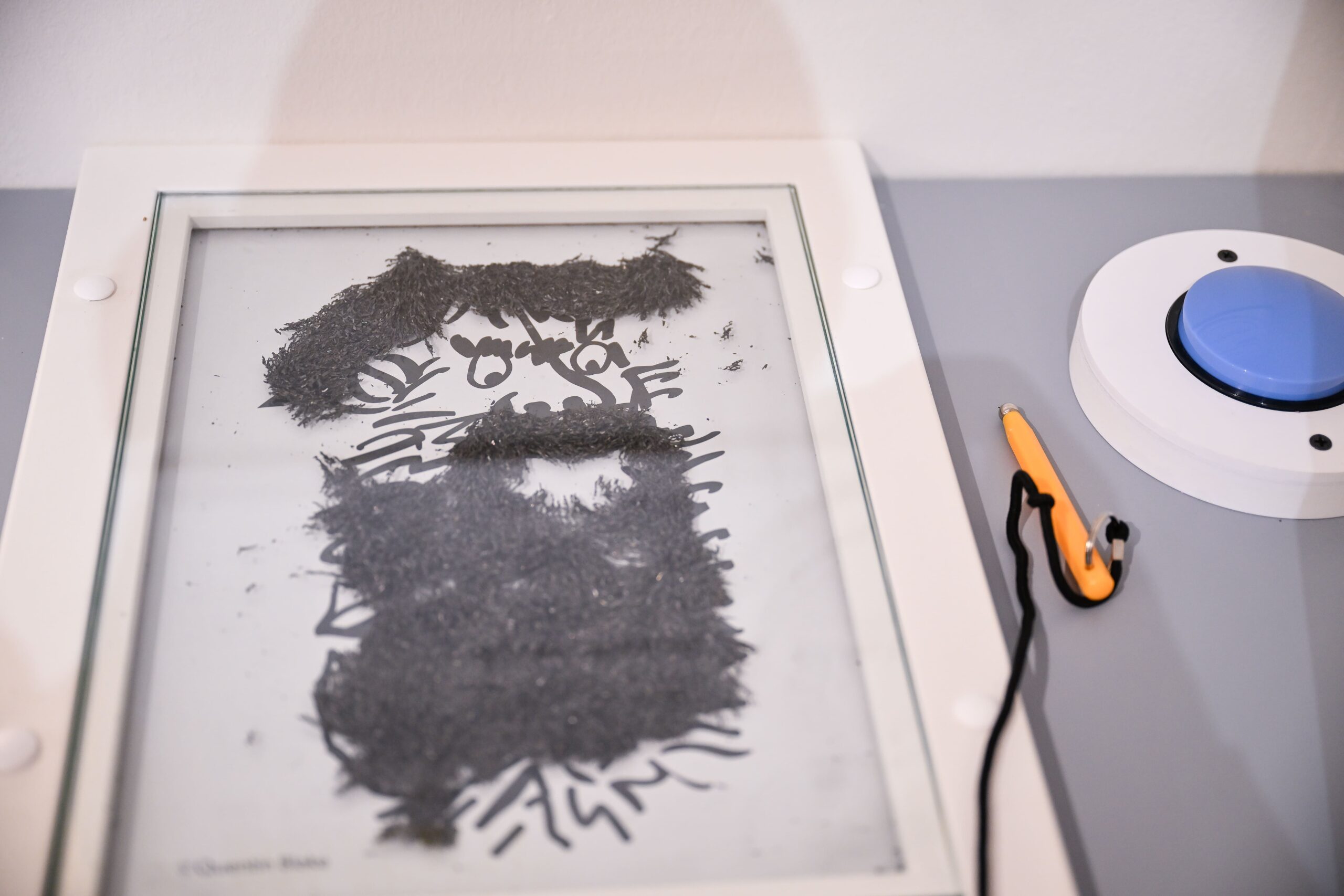
The two are mean, mischievous, unkempt and full of bad habits. Mr Twit is especially famous for his huge beard, thick and untidy, in which scraps of food and other disgusting surprises are hidden.
Blake transforms Dahl’s description into an instantly recognisable image. The beard is created through a dense layering of irregular lines that make the character look even dirtier and more grotesque.
There is also an interesting fact: Dahl had a real dislike of beards. It is possible that this aversion contributed to making Mr Twit’s beard one of the character’s most memorable features.
The BFG and the meeting with the Queen
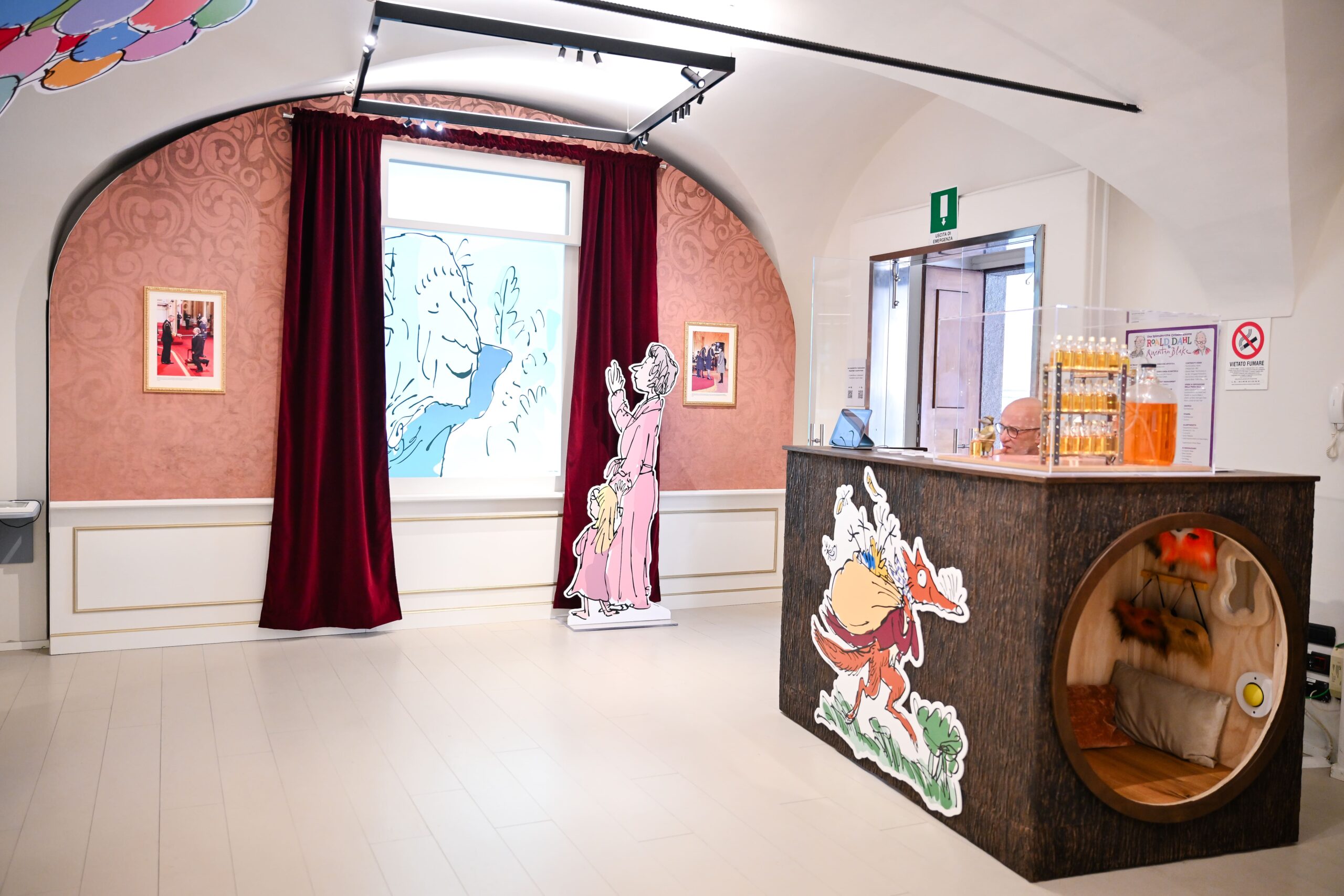
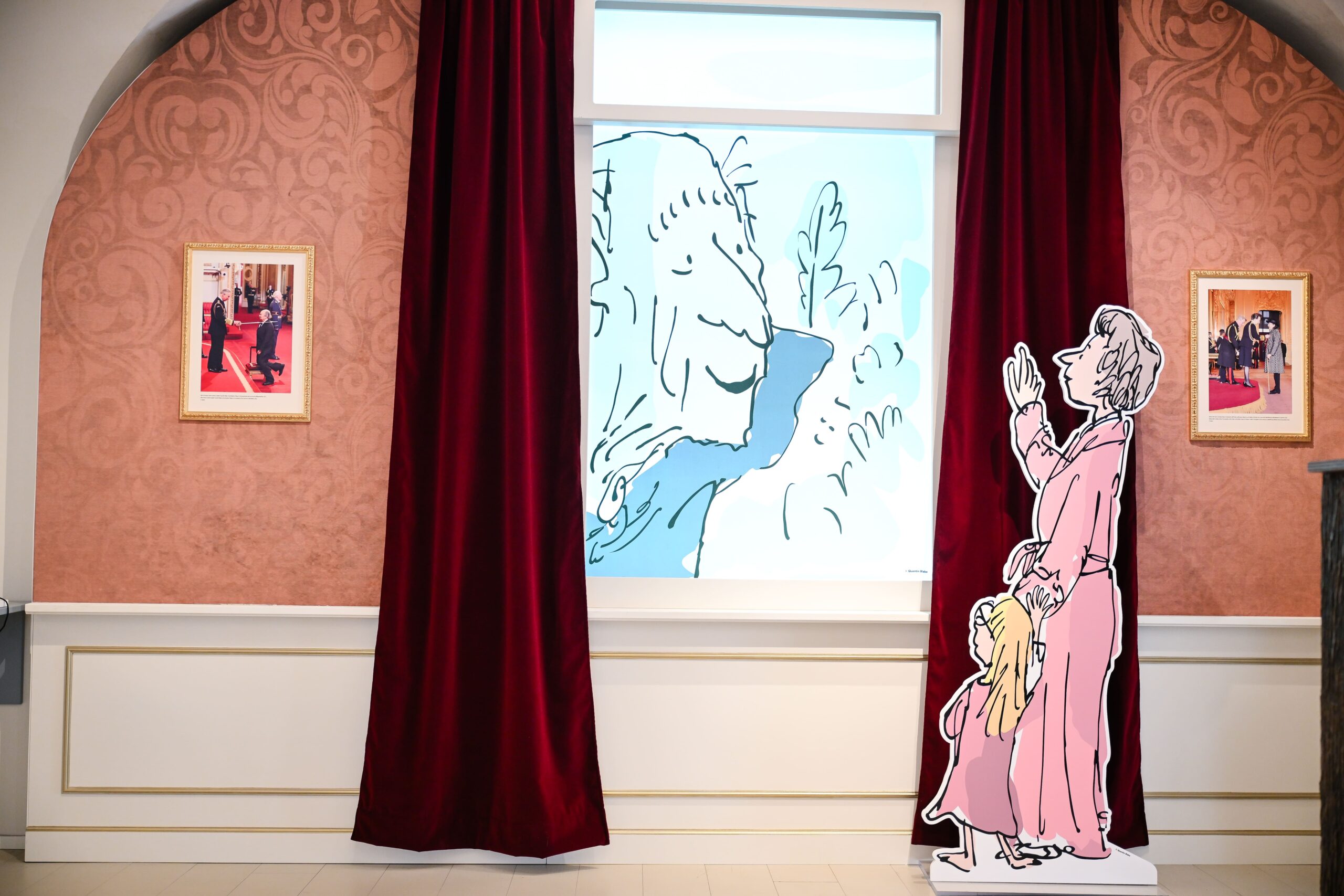
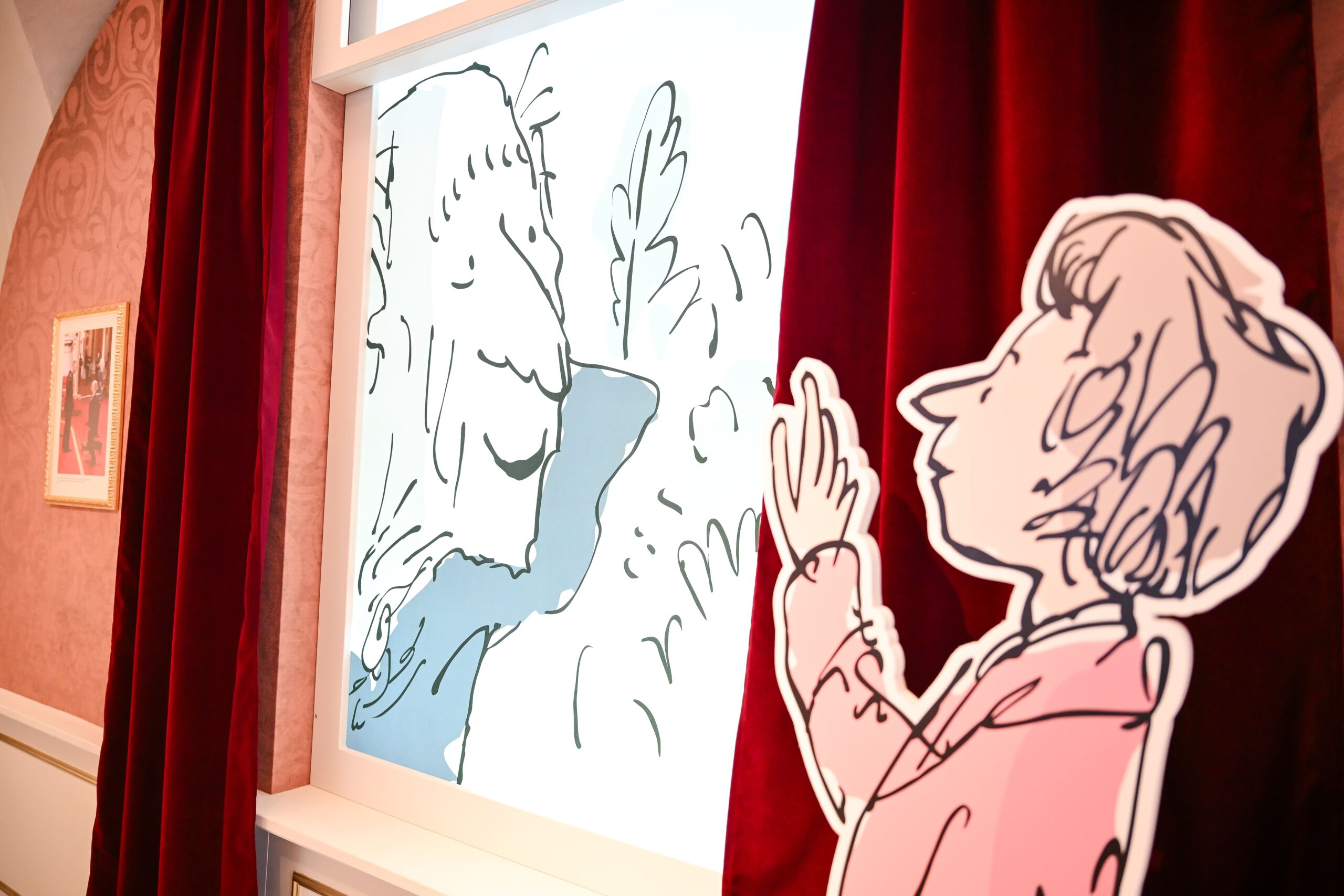
An entire wall is occupied by a reconstruction of the meeting between the BFG and the Queen at Buckingham Palace.
The BFG appears at the window of the royal bedroom, immediately after the Queen’s abrupt awakening, caused by a prophetic nightmare that he himself has induced, in order to warn her about the danger posed by the other giants, who are killing children all over the world.
The installation transforms a two-dimensional illustration into a three-dimensional reconstruction, complete with a window, wood panelling, damask wallpaper and velvet curtains.
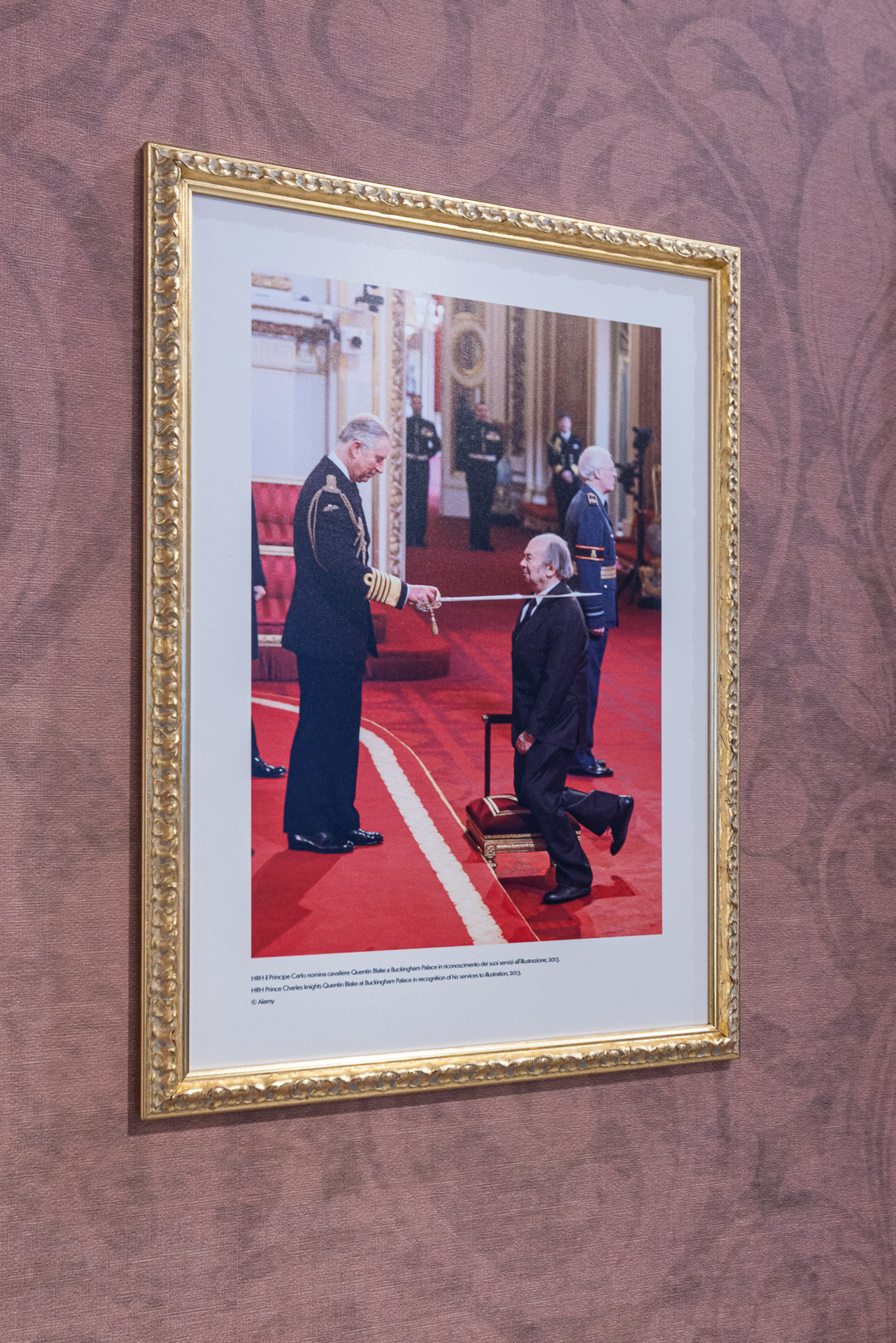
On either side of the window are two photographs in gold frames.
One shows Quentin Blake being knighted by HRH Prince Charles at Buckingham Palace in 2013, in recognition of his services to illustration.
The other shows Felicity Dahl on the occasion of her appointment as a Dame Commander of the Order of the British Empire in 2024, in recognition of her services to philanthropy, literature and young people.
Felicity Dahl, the writer’s second wife and widow, founded The Roald Dahl Museum and Story Centre and Roald Dahl’s Marvellous Children’s Charity, the charitable organisation that supports children and young people with serious illnesses and their families through a network of specialist nurses.
The reconstruction thus brings the fantastical world of the BFG into dialogue with reality: the character imagined by Dahl and drawn by Blake enters the real space of the exhibition, while the photographs bring visitors back to the story of the people who helped keep the writer’s creative world alive.
ROOM 2 – QUENTIN BLAKE: DRAWING, DRAWING, DRAWING
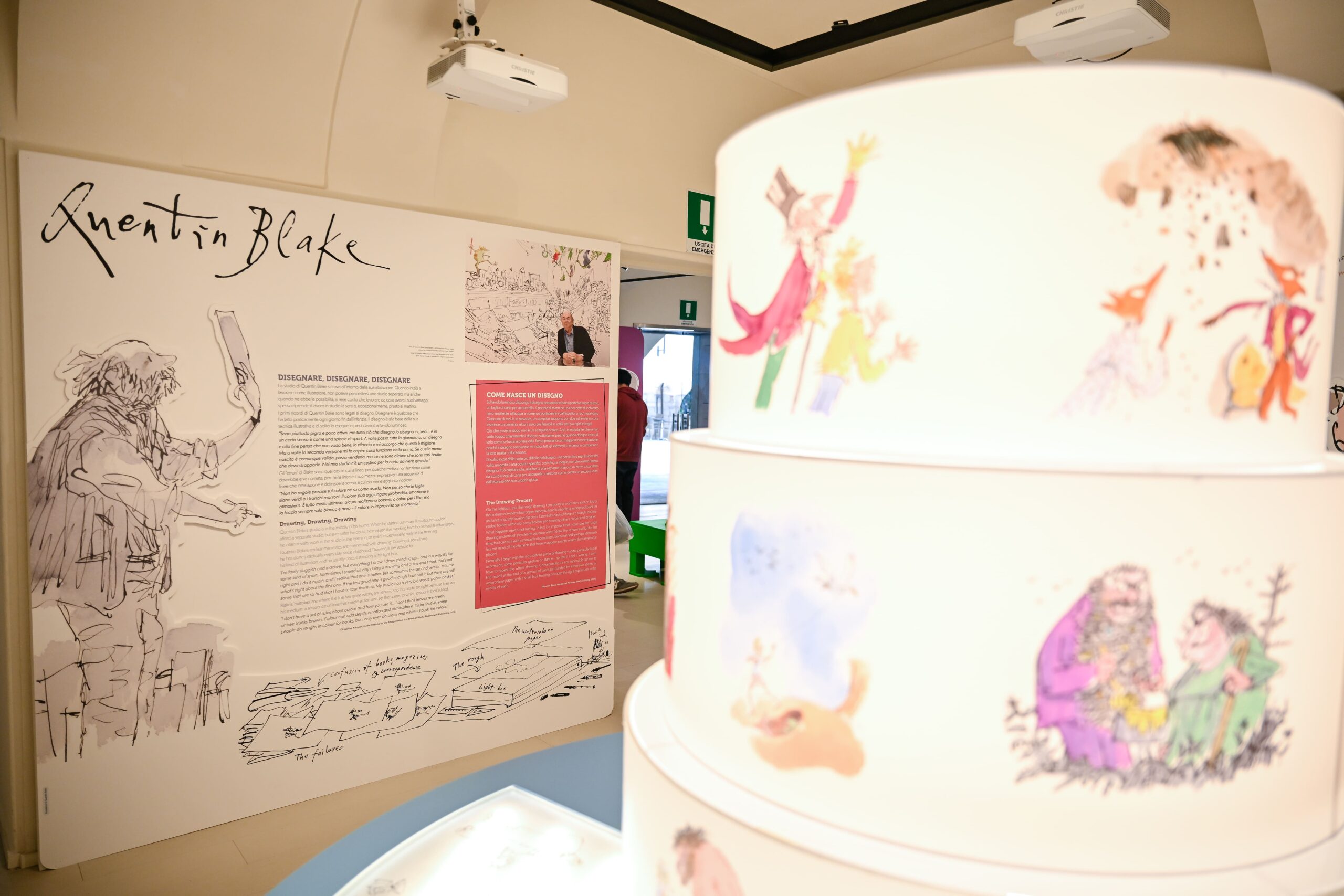
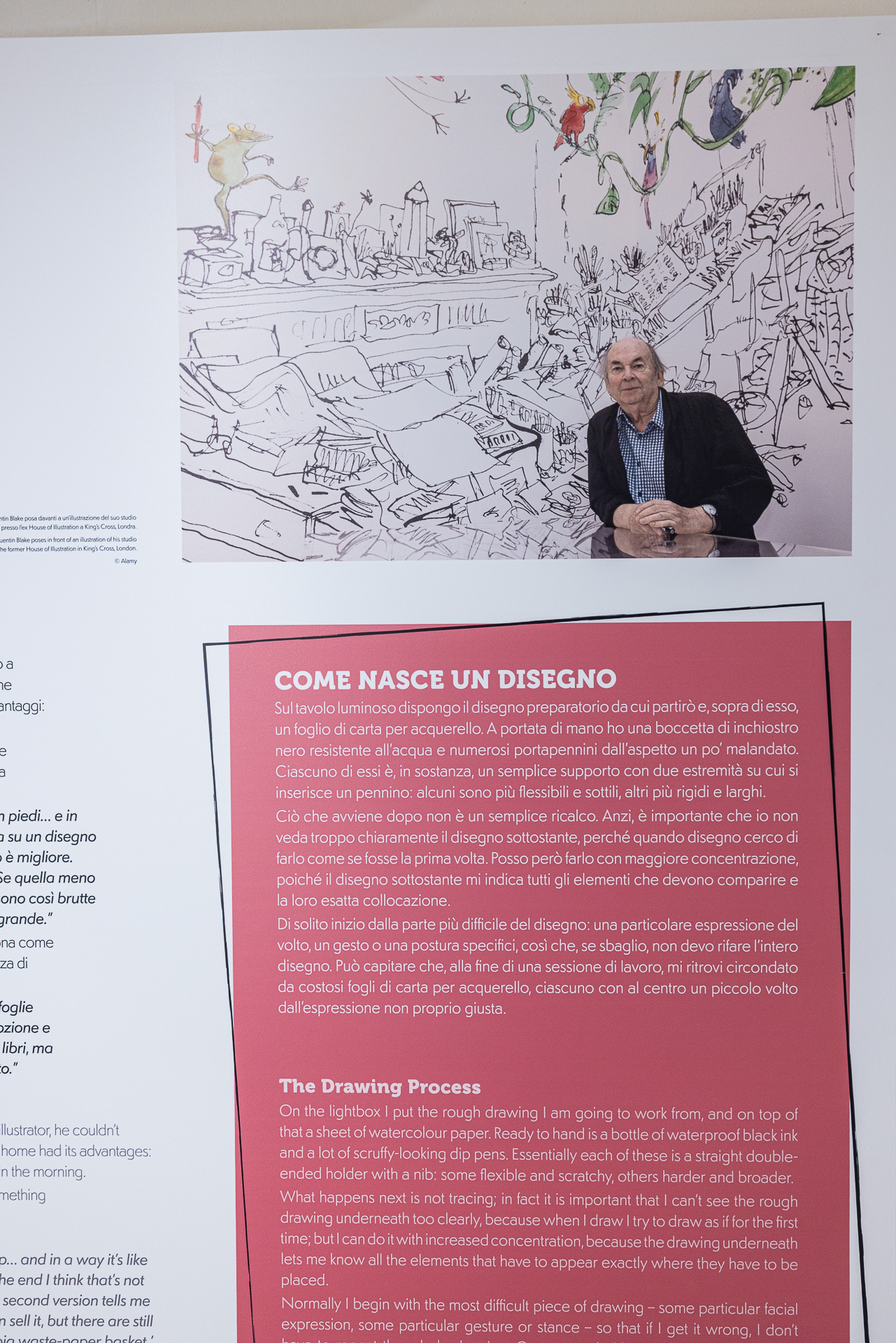
The second room is dedicated to Quentin Blake and his way of drawing, always in relation to his creative dialogue with Roald Dahl.
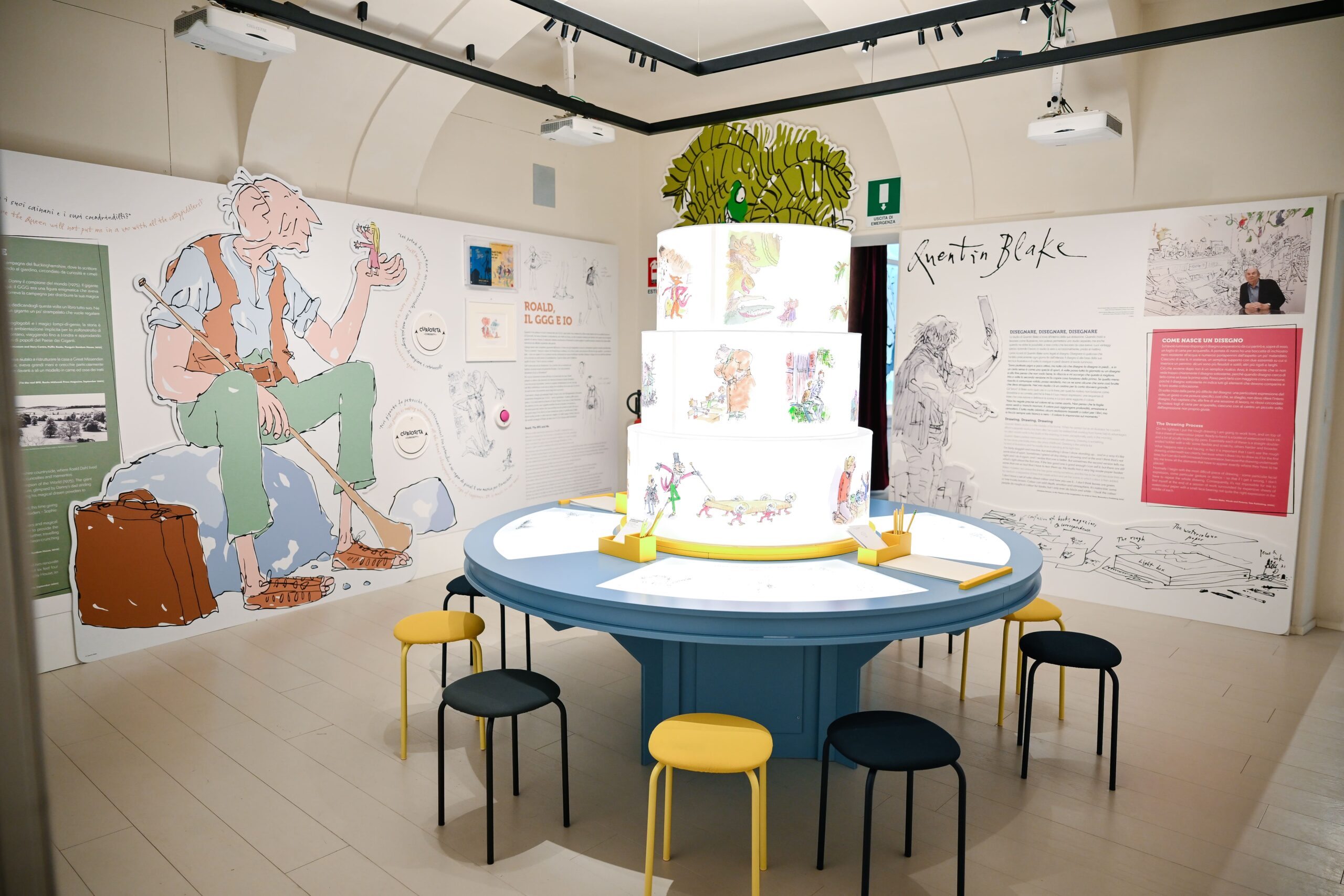
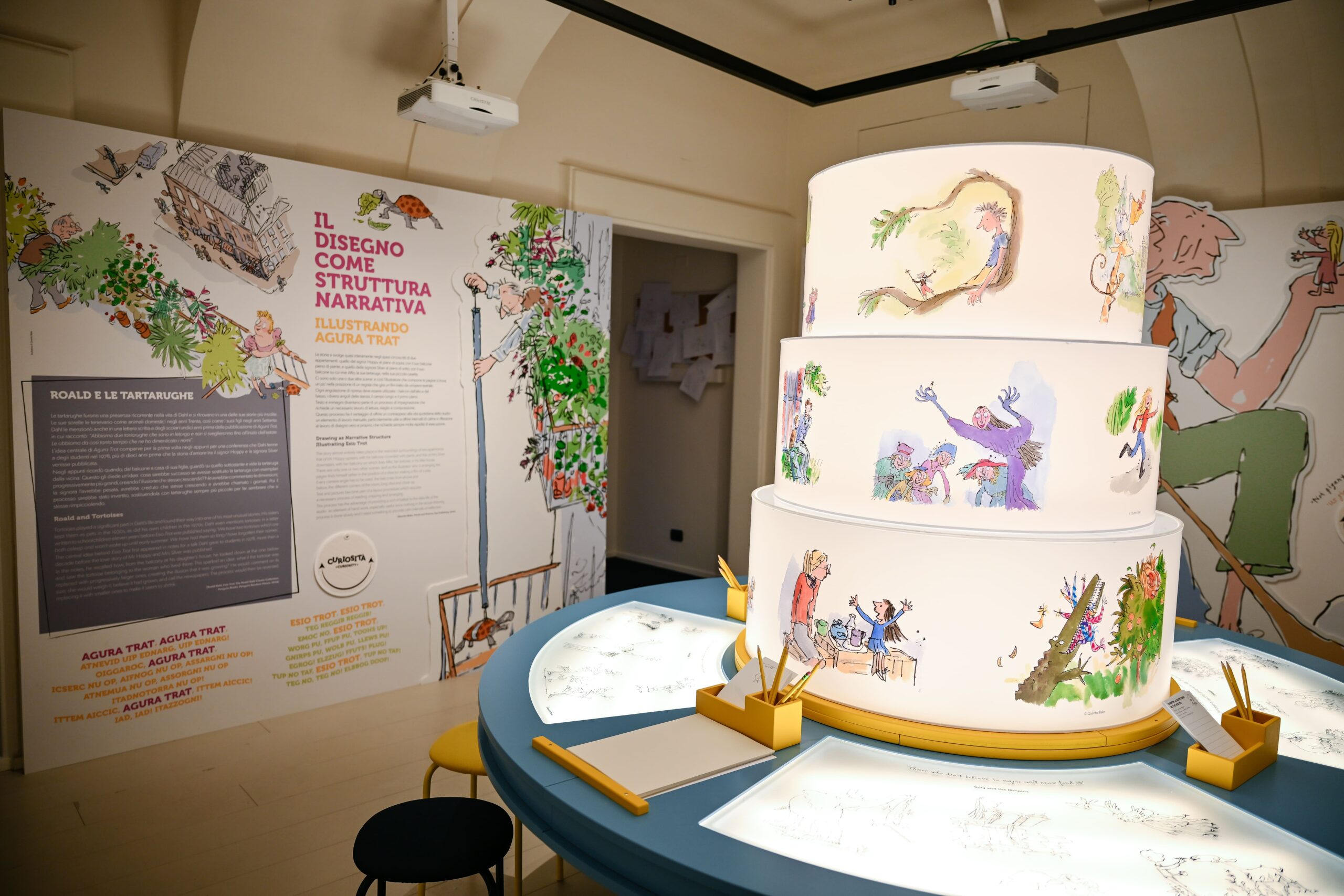
The room has two entrances and can be visited from either side. The walls are dedicated to four thematic sections, exploring his way of drawing, his use of colour, and the creative process behind The BFG, Matilda and Esio Trot.
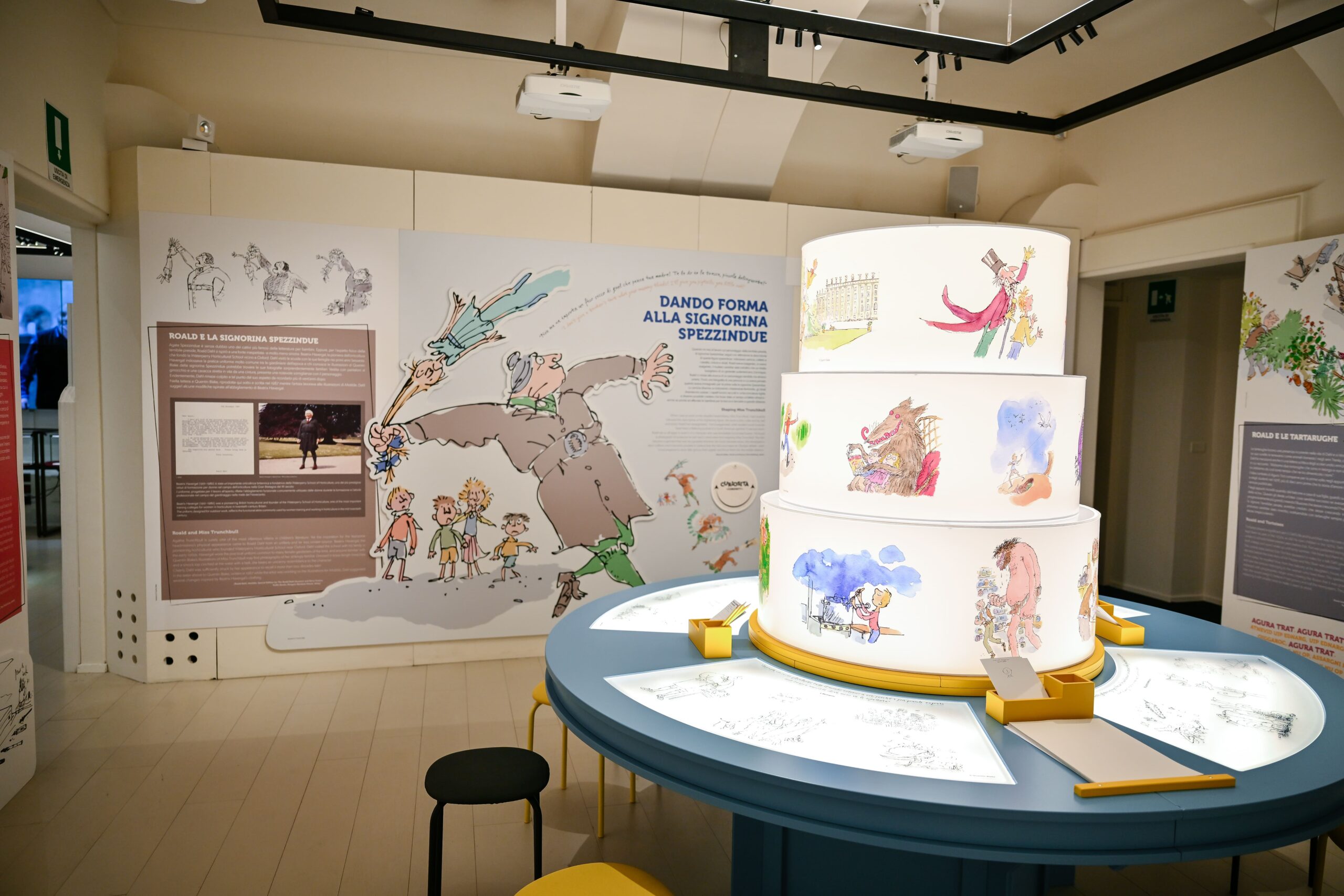
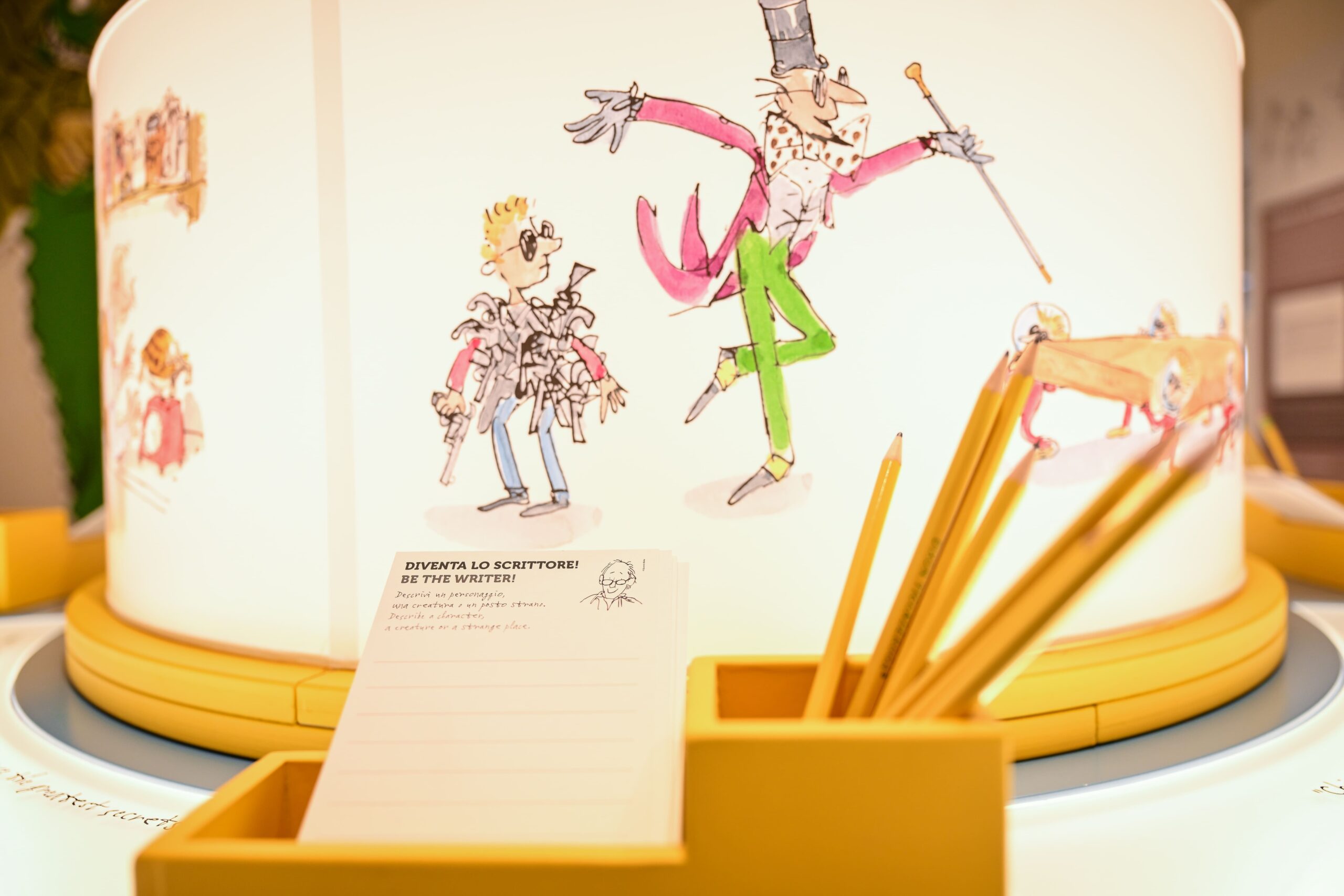
At the centre of the room is a large round table where visitors can sit and draw. Suspended above the table is a large three-level lampshade decorated with illustrations from Dahl’s books: a carousel of characters and colours that evokes Blake’s creative world.
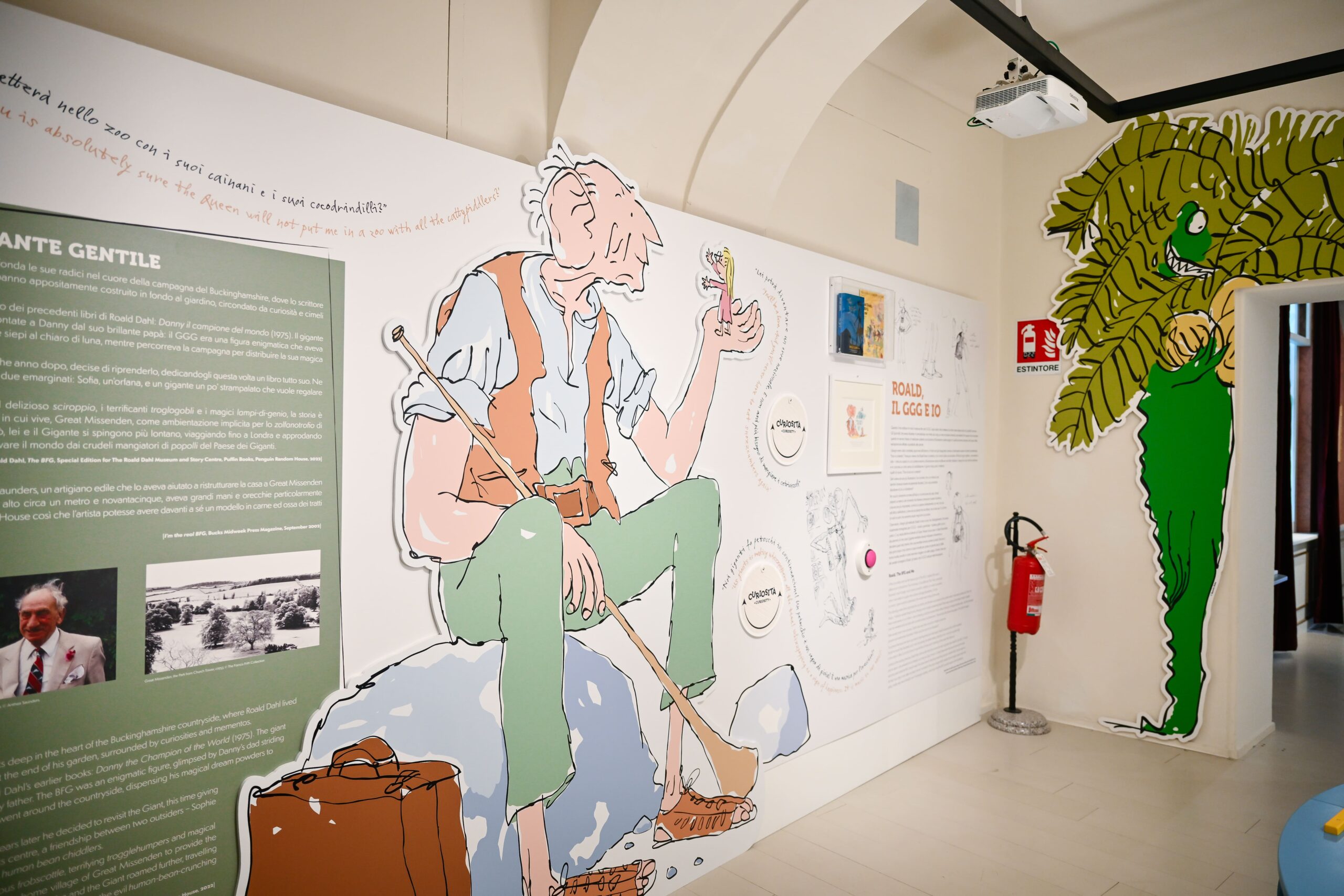
The BFG
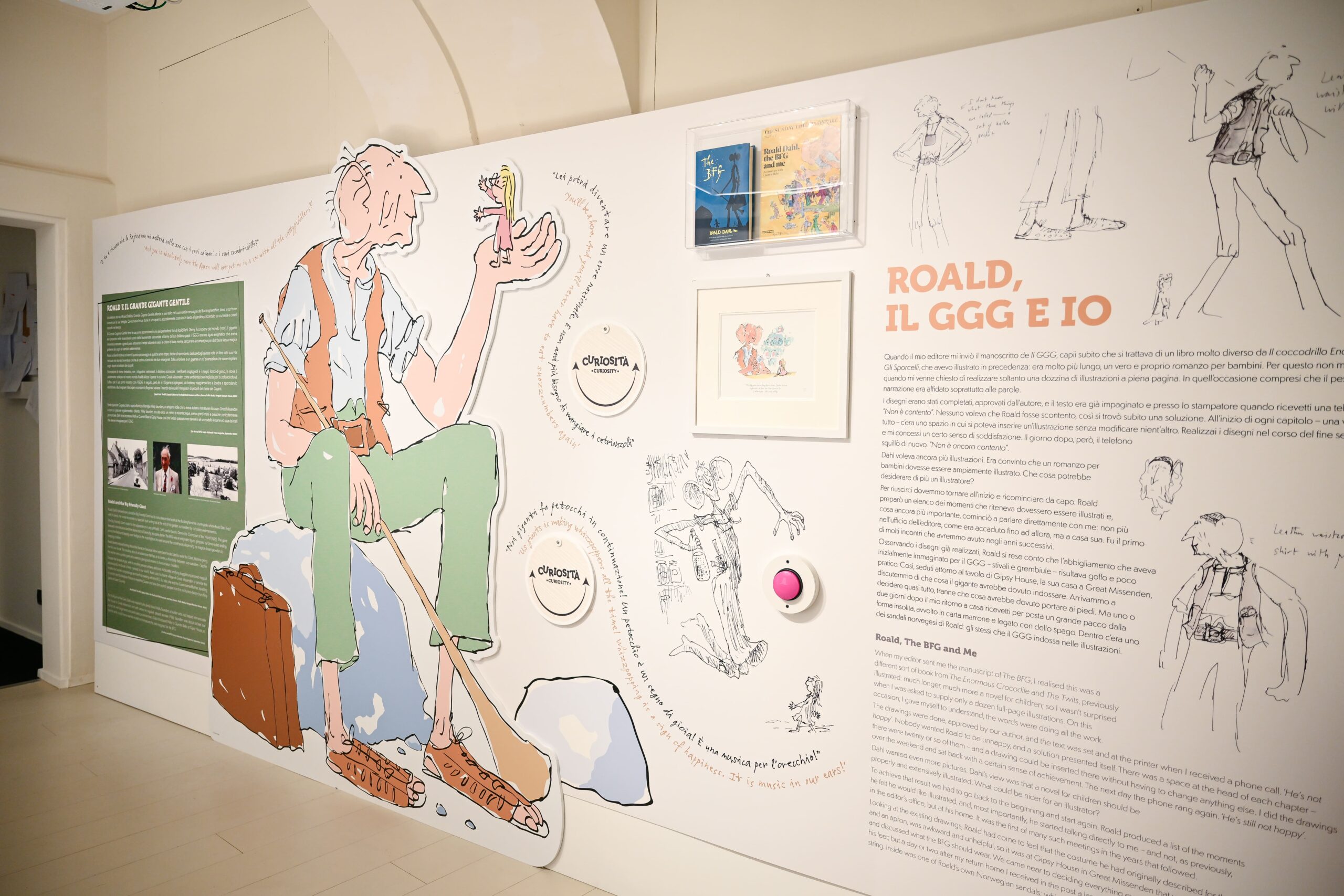
An entire section is dedicated to The BFG, the Big Friendly Giant.
The BFG is not a completely new character. He had already appeared in Danny, the Champion of the World, published in 1975, in the bedtime stories that Danny’s father told him. Even then, the giant brought dreams to sleeping children.
For the BFG’s appearance, Dahl was inspired by Wally Saunders, a very tall family friend with large hands and prominent ears. Dahl introduced Saunders to Blake, allowing him to observe him directly.
Blake then transformed this real-life model into a fantastical character: he made the BFG even taller and thinner, exaggerating his proportions to communicate his great size and, at the same time, his clumsiness.
Sophie is an orphan girl. The BFG kidnaps her because she catches him blowing dreams to children. Together, however, they devise a plan to save the world from the other giants, who eat children.
The character of Sophie was named after Sophie Dahl, Roald Dahl’s granddaughter.
Matilda
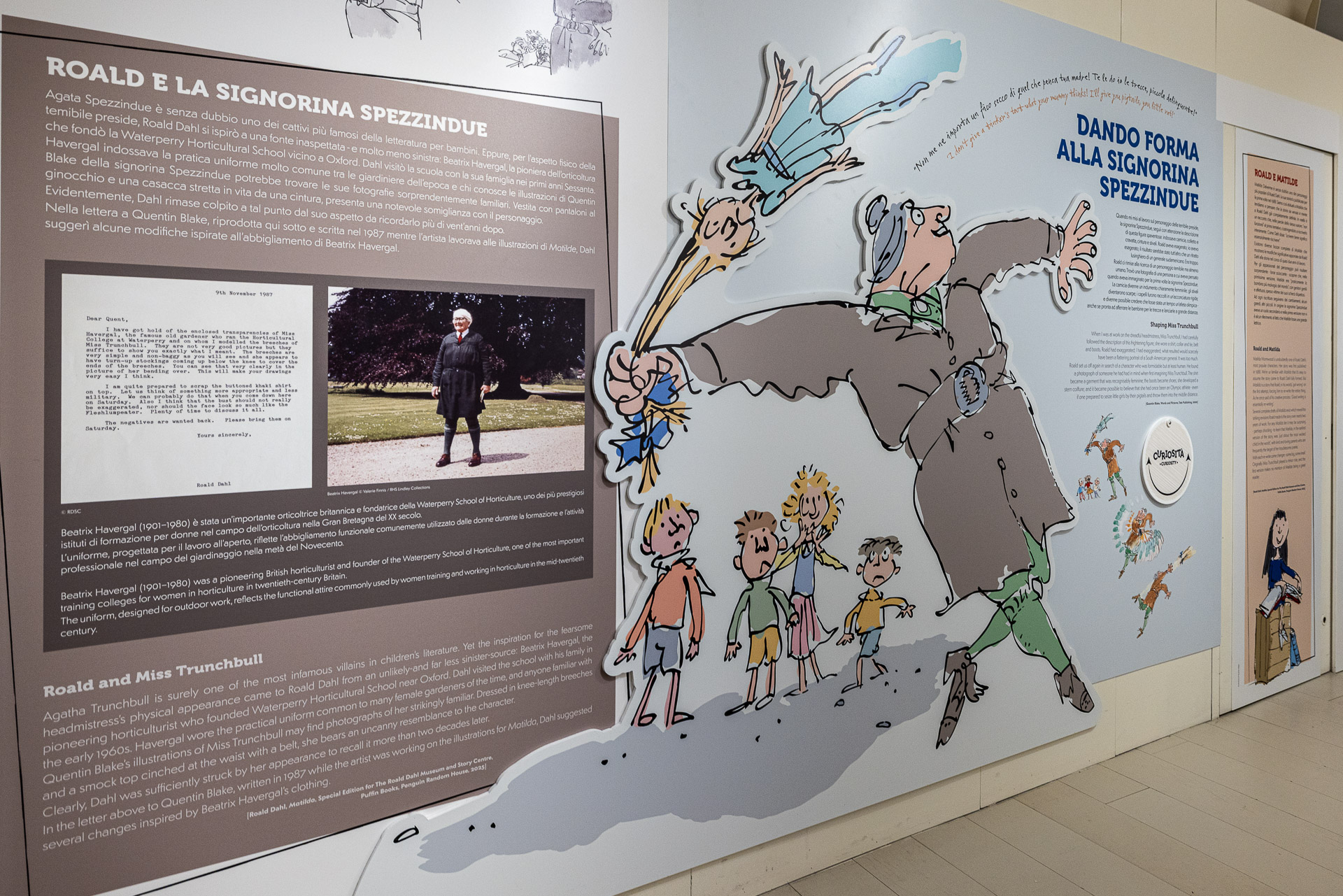
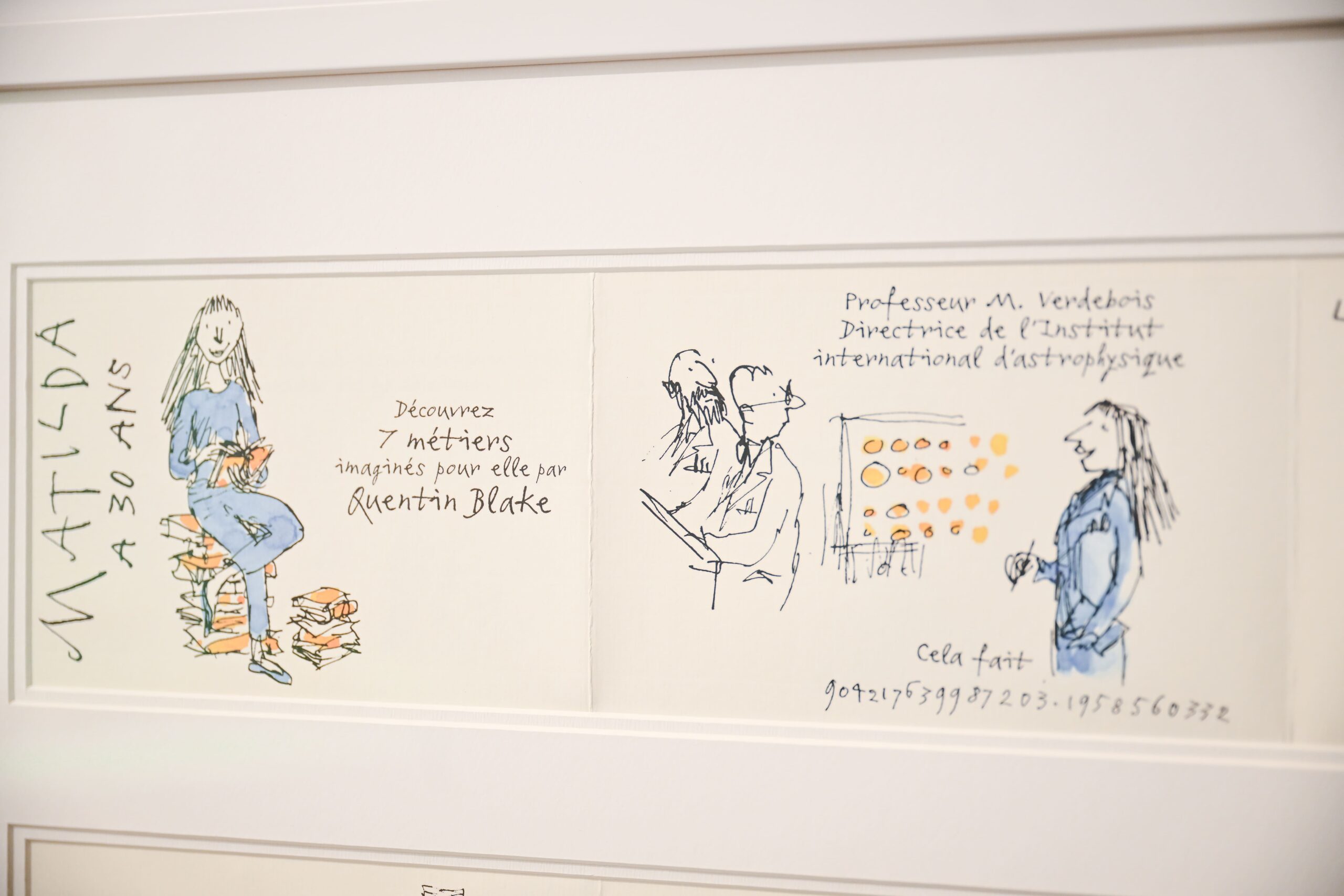
Another section is dedicated to Matilda.
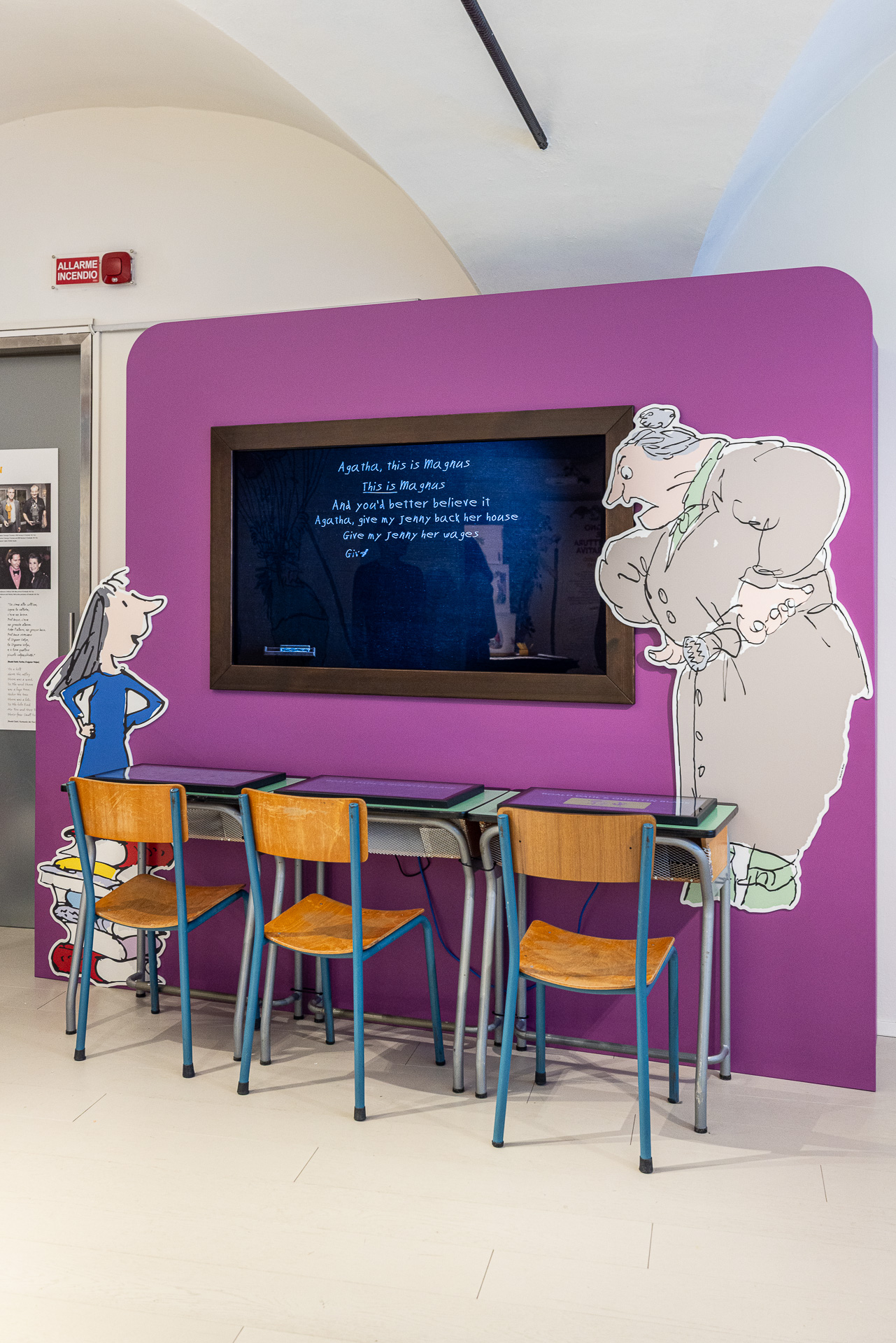
At the centre of the wall, Matilda is shown sitting on a pile of books, a symbol of her love of reading. Beside her is a large reproduction of the illustration of Agatha Trunchbull, the terrifying headmistress, shown throwing a schoolgirl by her pigtails because she has come to school with a hairstyle she does not like.
Published in 1988, Matilda was written by Dahl over a period of almost two years and rewritten many times.
In the early versions, Matilda was the most terrible child in the world and her parents loved her. Through the successive rewrites, the story changed profoundly: Miss Trunchbull took on an increasingly important role, while Matilda became an extremely intelligent girl with a passion for books, neglected and largely ignored by her own family.
Esio Trot
The final section is dedicated to Esio Trot, one of Dahl’s lesser-known books.
It was chosen because the role of the illustrations is particularly important here and because it shows one of the most interesting forms of the relationship between words and images in the collaboration between Dahl and Blake.
The story takes place mainly inside the two protagonists’ flats. Blake represents the same spaces from different viewpoints: from above, from below, from far away or very close up.
It is as if he were a film director or camera operator: he can move the viewer’s gaze away or bring it closer, change position and decide each time what to show.
The page layout also becomes part of the storytelling. Text and images do not simply sit alongside each other: they interact and build the story together.
ROOM 3 – THE FACTORY OF IMAGINATION
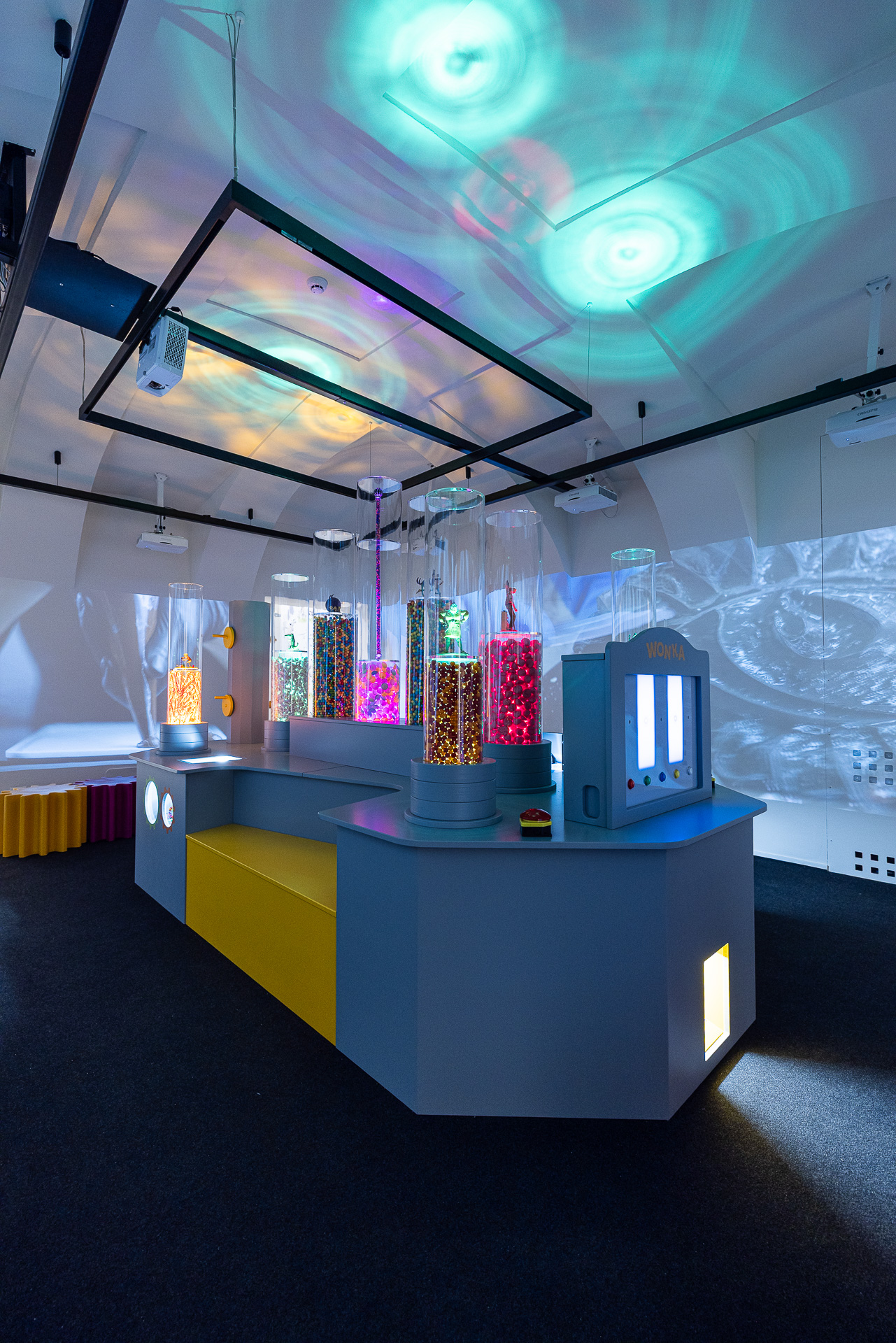
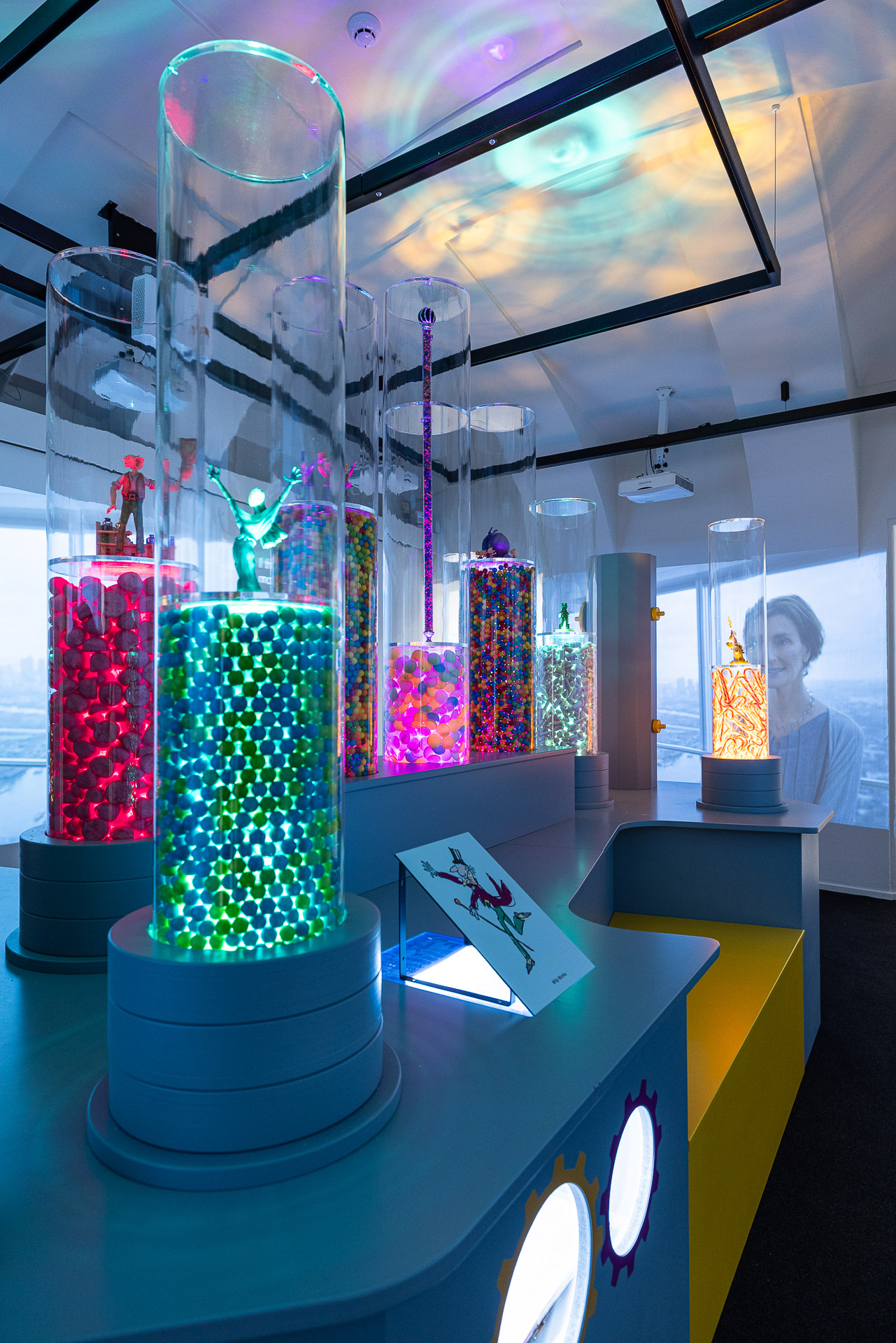
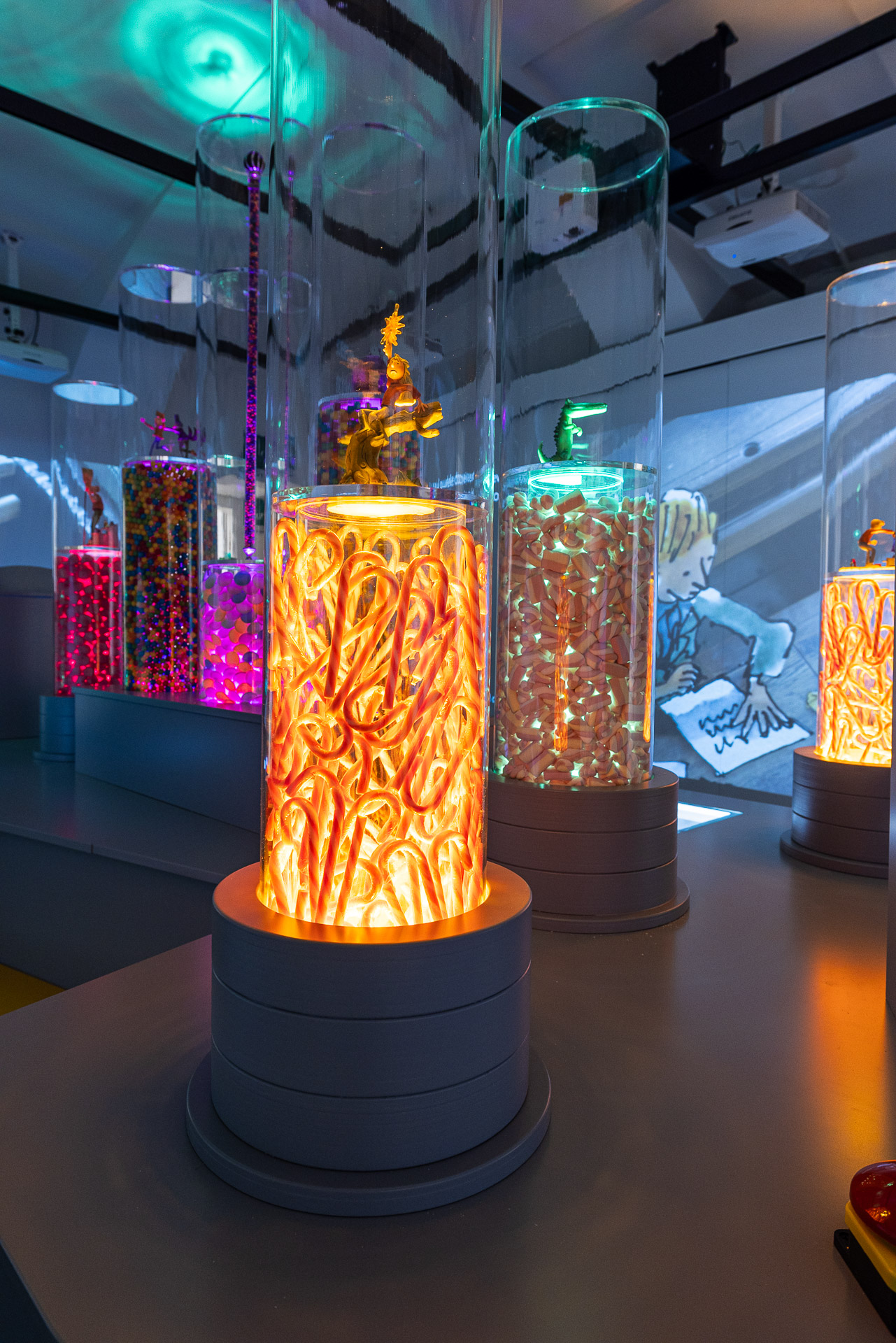
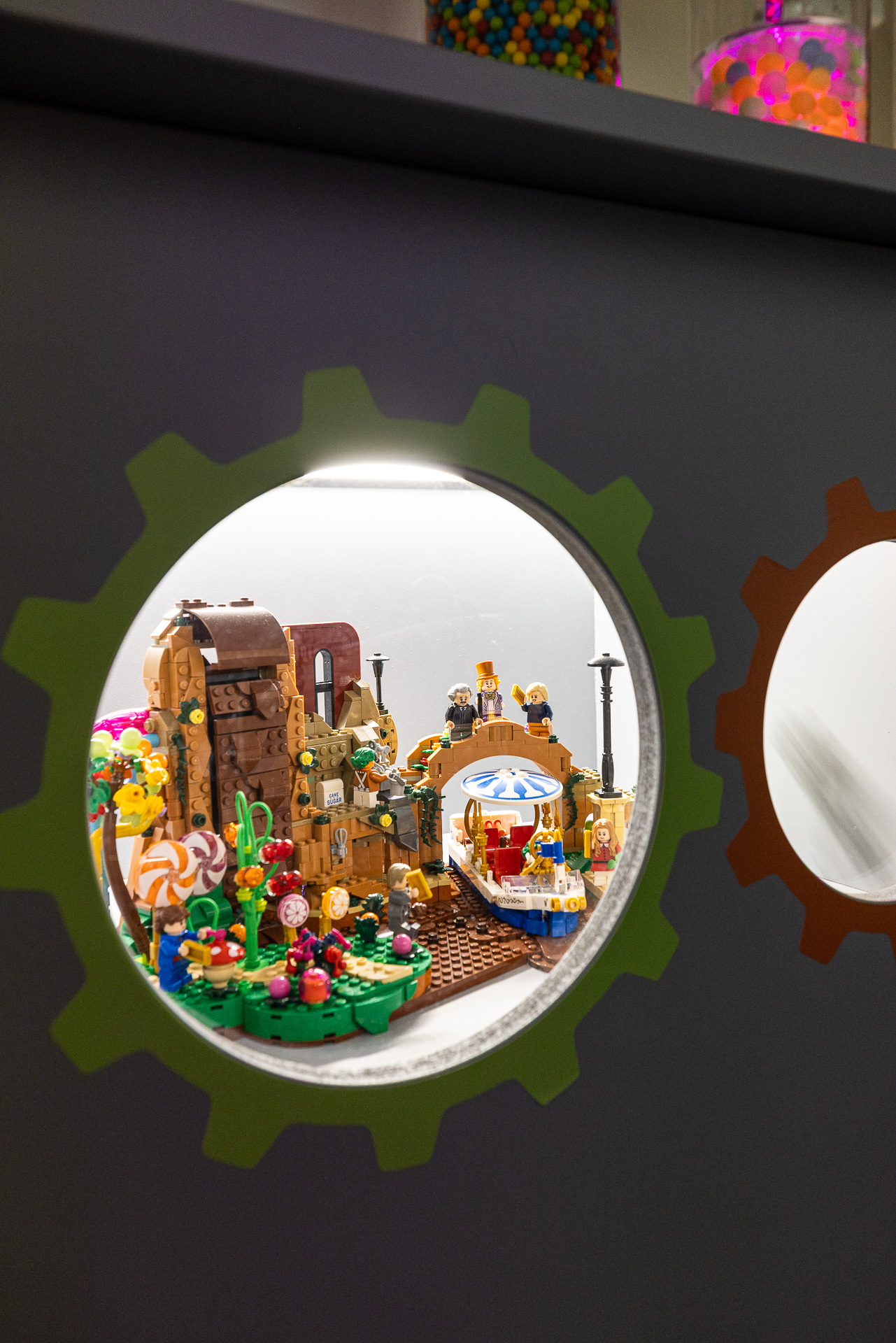
The third room is an immersive environment inspired by the universe of Charlie and the Chocolate Factory. Through wall projections, lighting and scents, visitors are invited to explore the fantastical world of Willy Wonka.
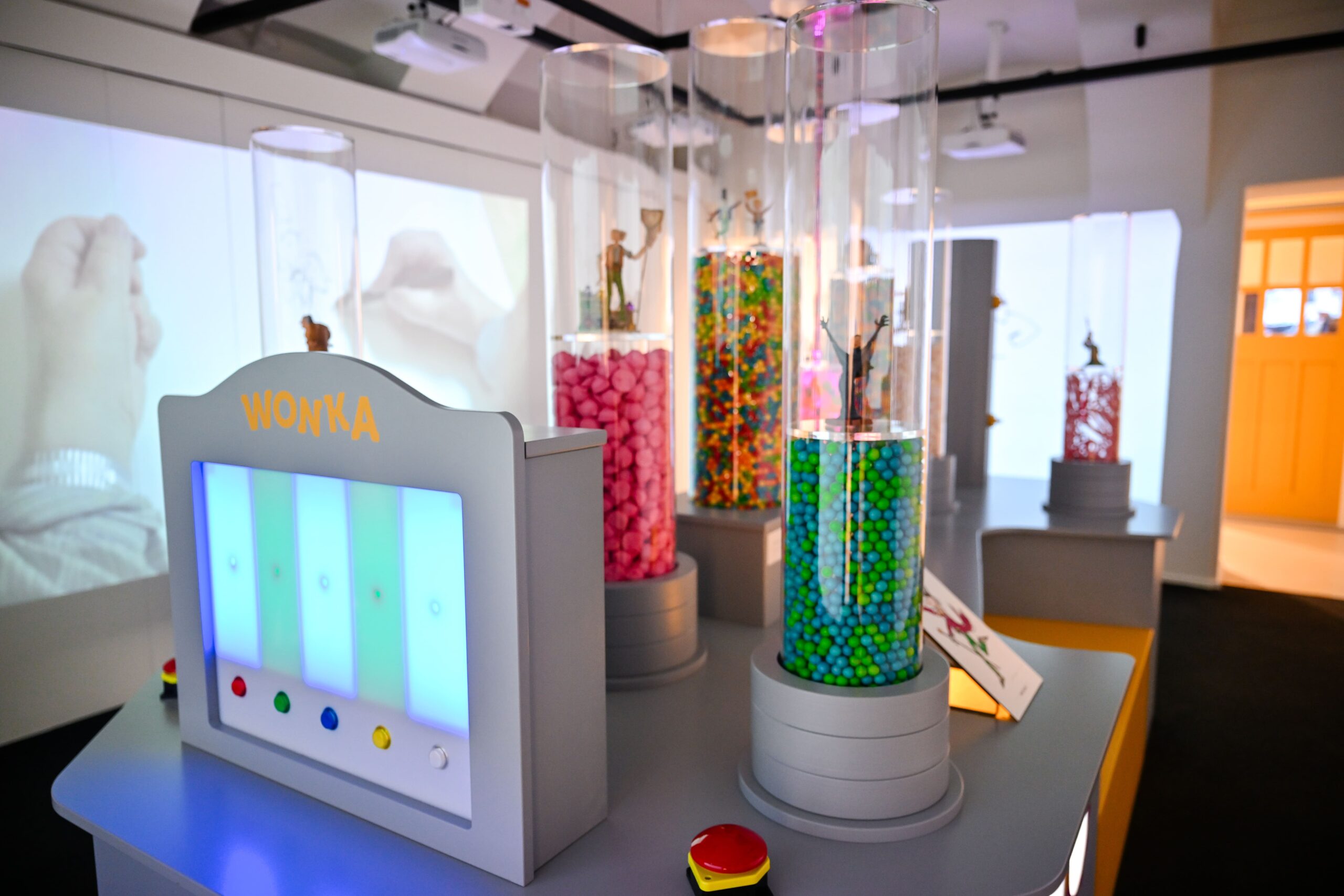
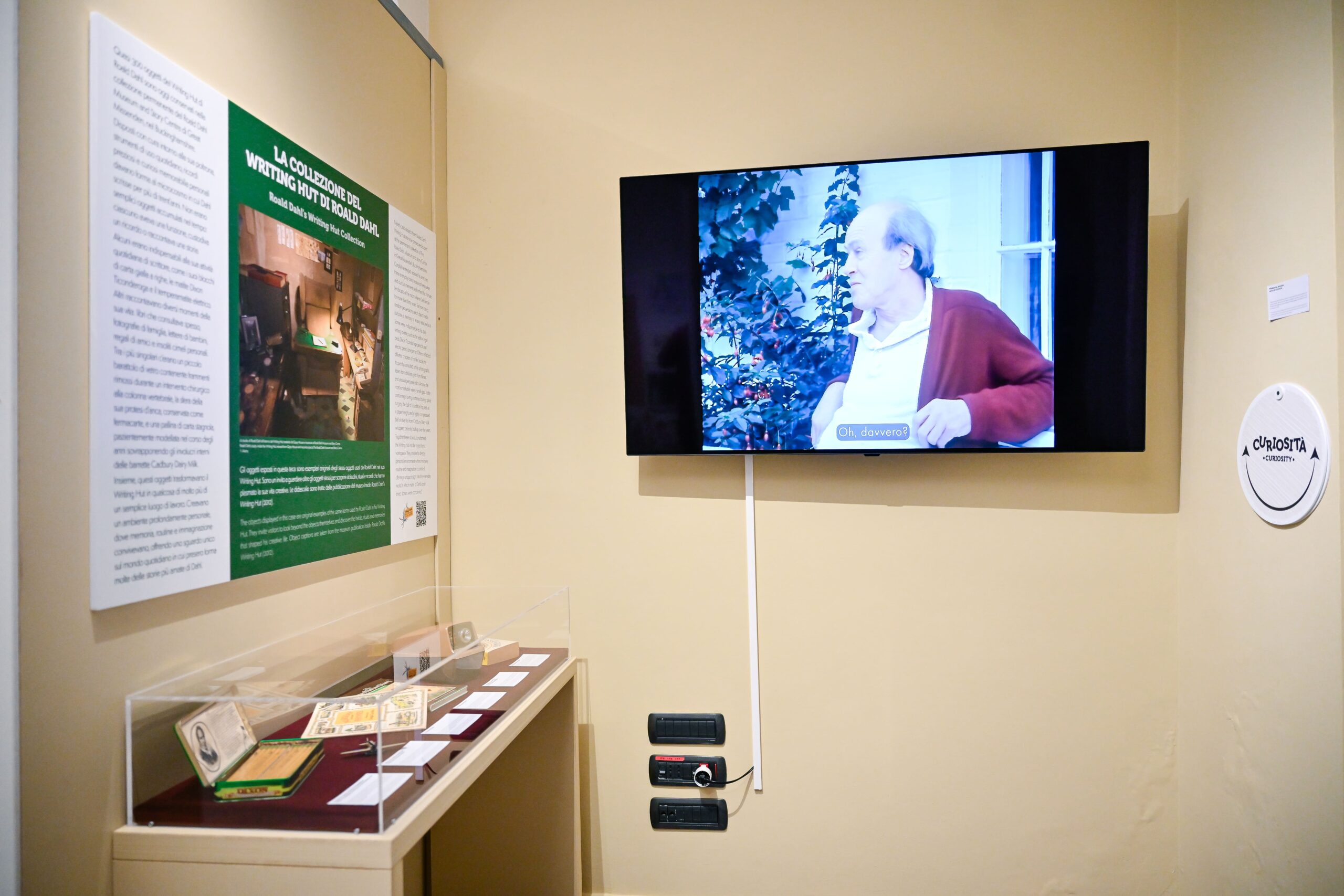
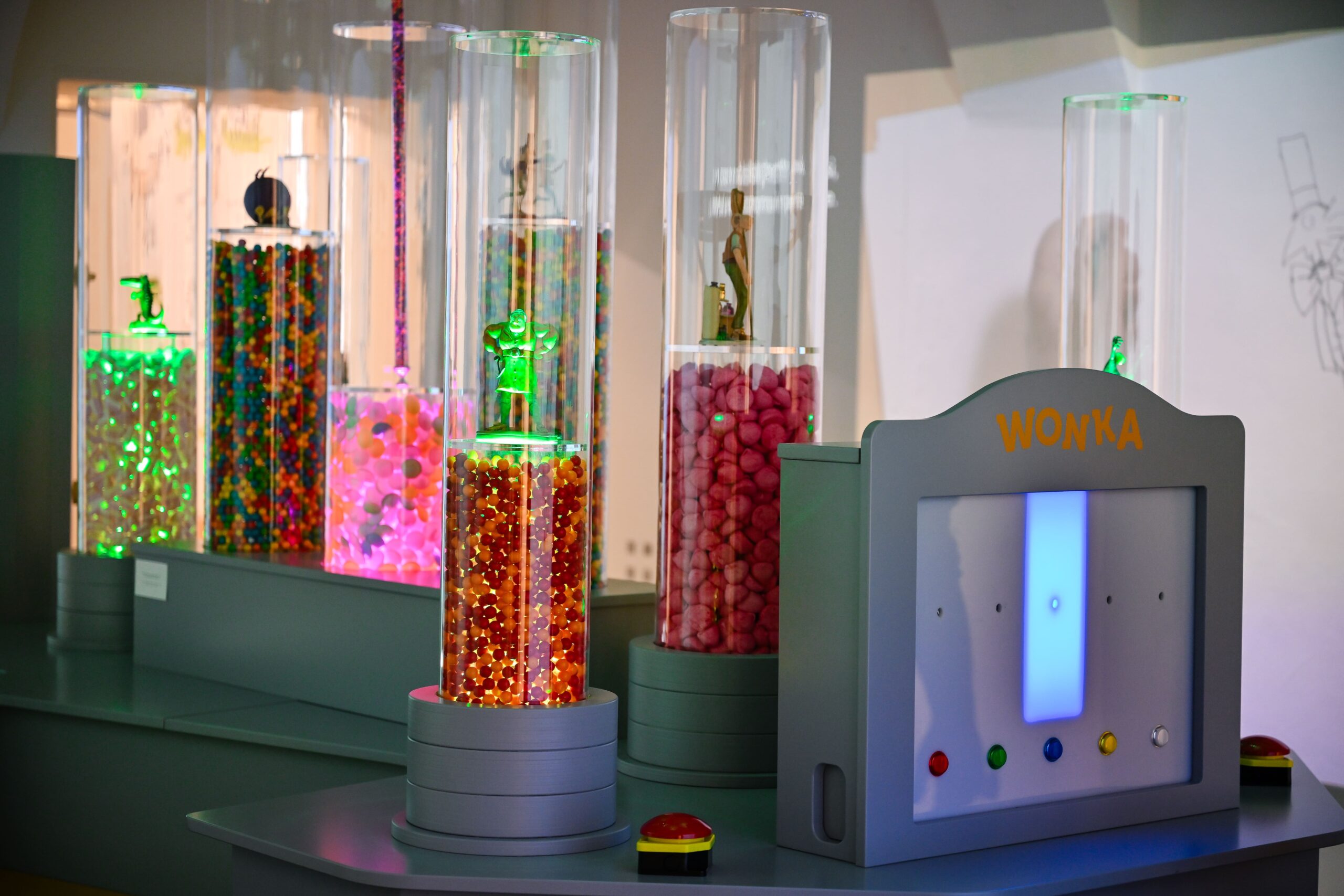
The room also invites visitors to interact with the environment through a series of buttons that activate lights, as well as two viewing devices through which they can browse a selection of Quentin Blake’s illustrations, presented like a small cabinet of curiosities.
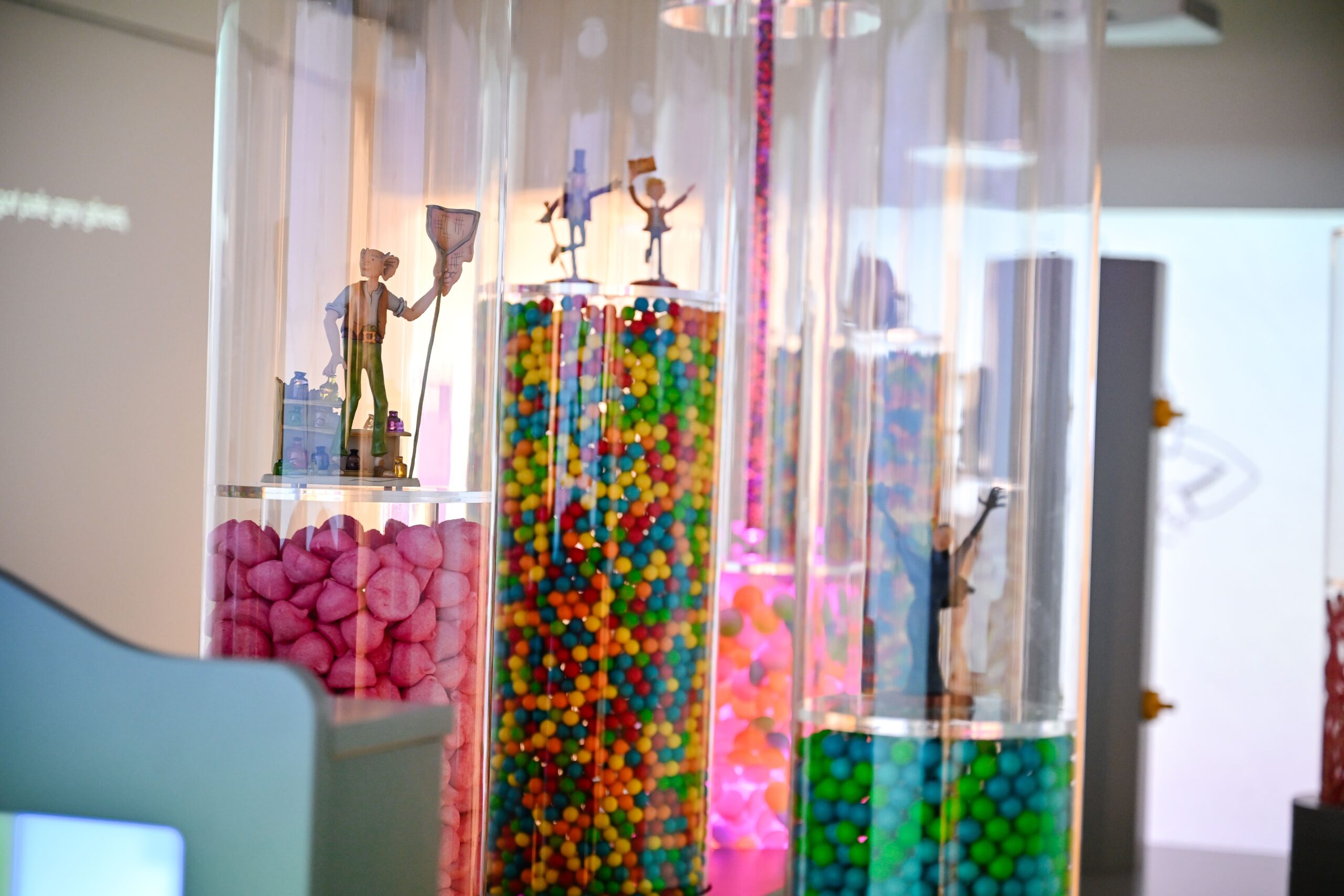
At the centre of the room, a multifunctional structure displays a selection of limited-edition sculptures created by Robert Harrop inside transparent tubes. The sculptures bring to three-dimensional life some of the most iconic characters from Quentin Blake’s illustrations.
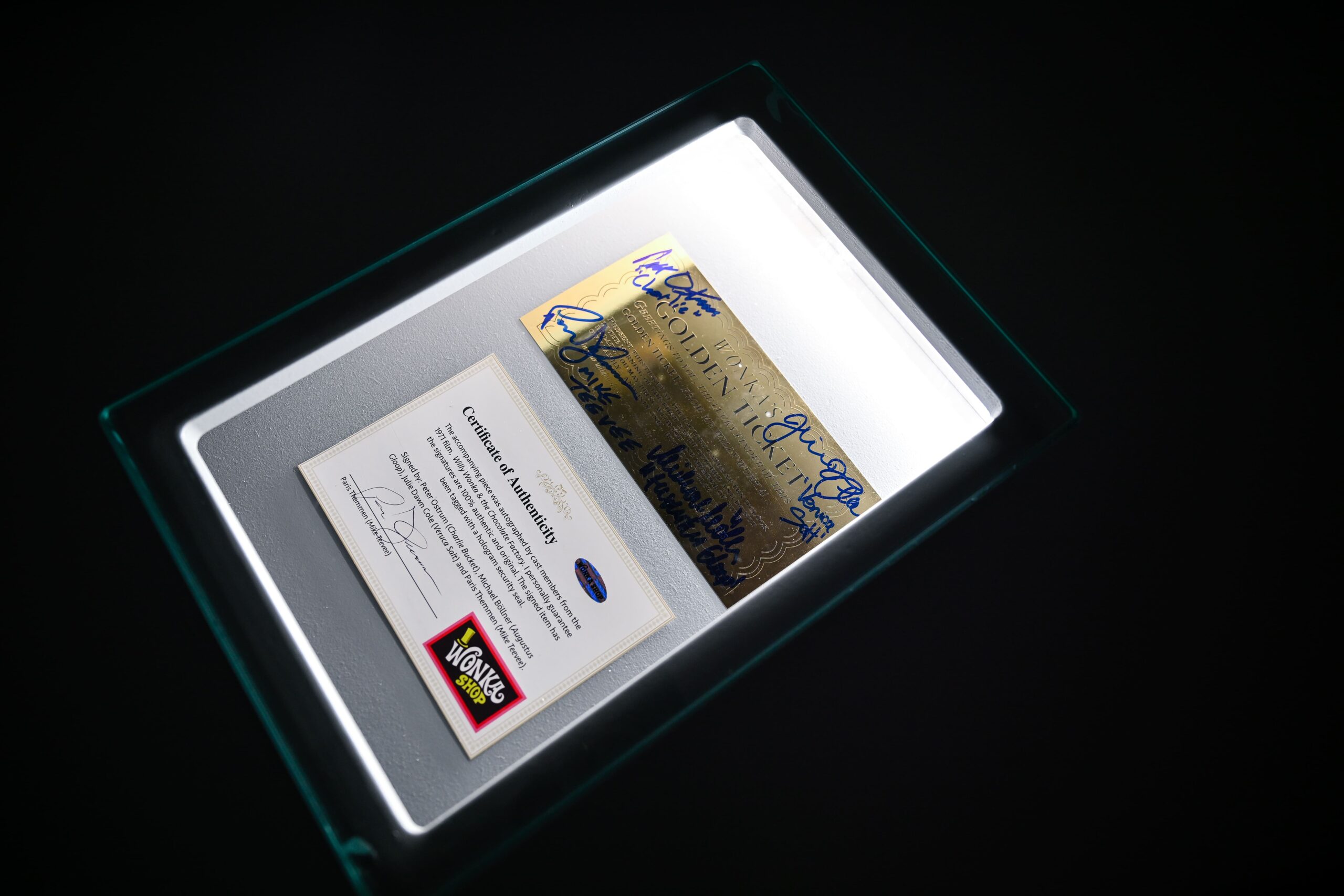
The section is completed by two objects connected to the book’s cinematic history: a replica of Willy Wonka’s cane from the 2005 film and a Golden Ticket signed by the leading actors of the 1971 film, Willy Wonka & the Chocolate Factory.
The room also anticipates the story of Roald Dahl’s passion for chocolate, explored in greater depth in the following room. This passion can be traced back to his school days, when Cadbury provided students with newly developed chocolate bars to taste, evaluate and comment on. The experience would later inspire Dahl’s creation of Charlie and the Chocolate Factory, inviting visitors to reflect on how the story continues to influence and inspire new generations.
ROOM 4 – THE WORLD OF ROALD DAHL
The final room tells the story of Roald Dahl’s personal world: his life, his passions and the experiences that fed his imagination.
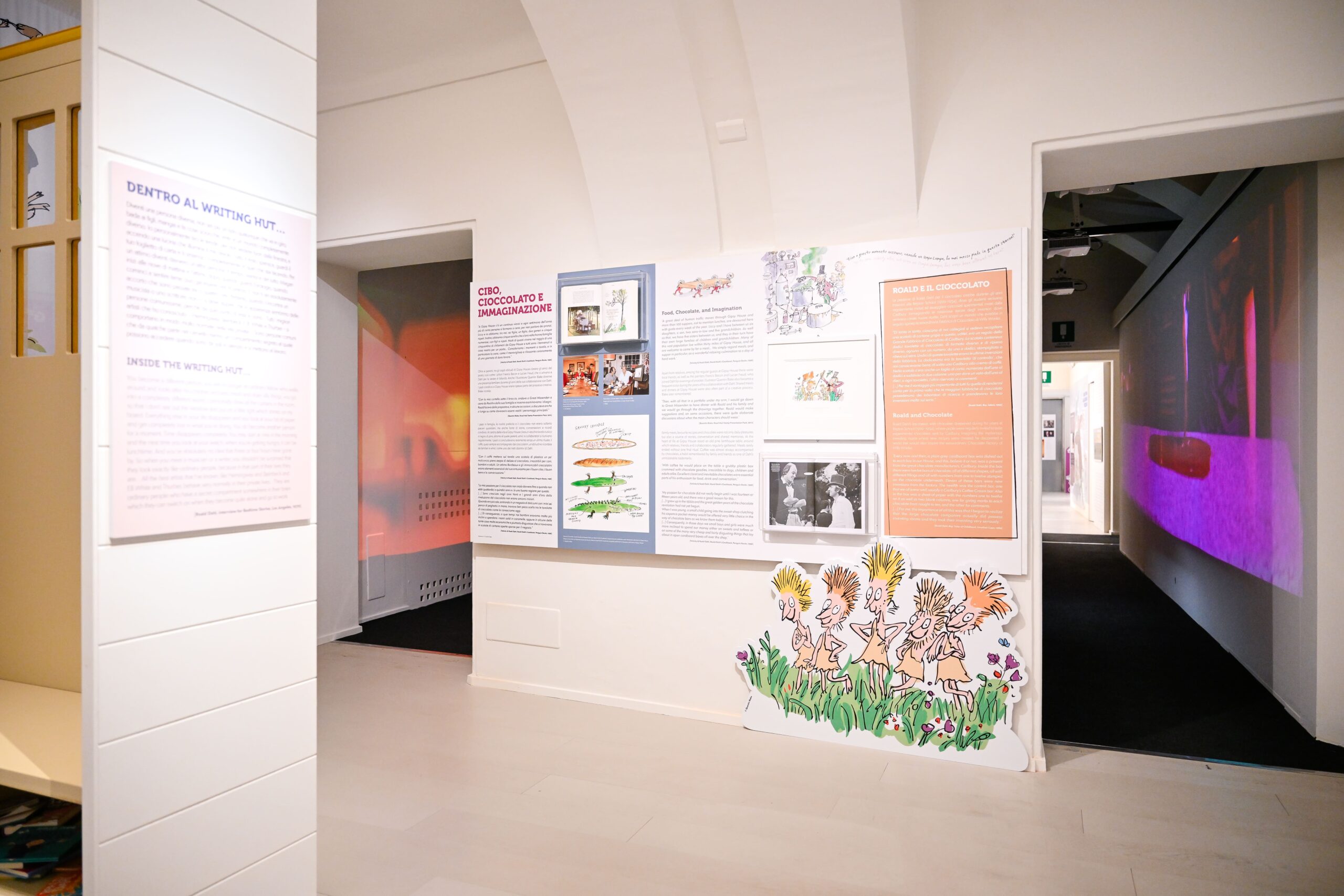
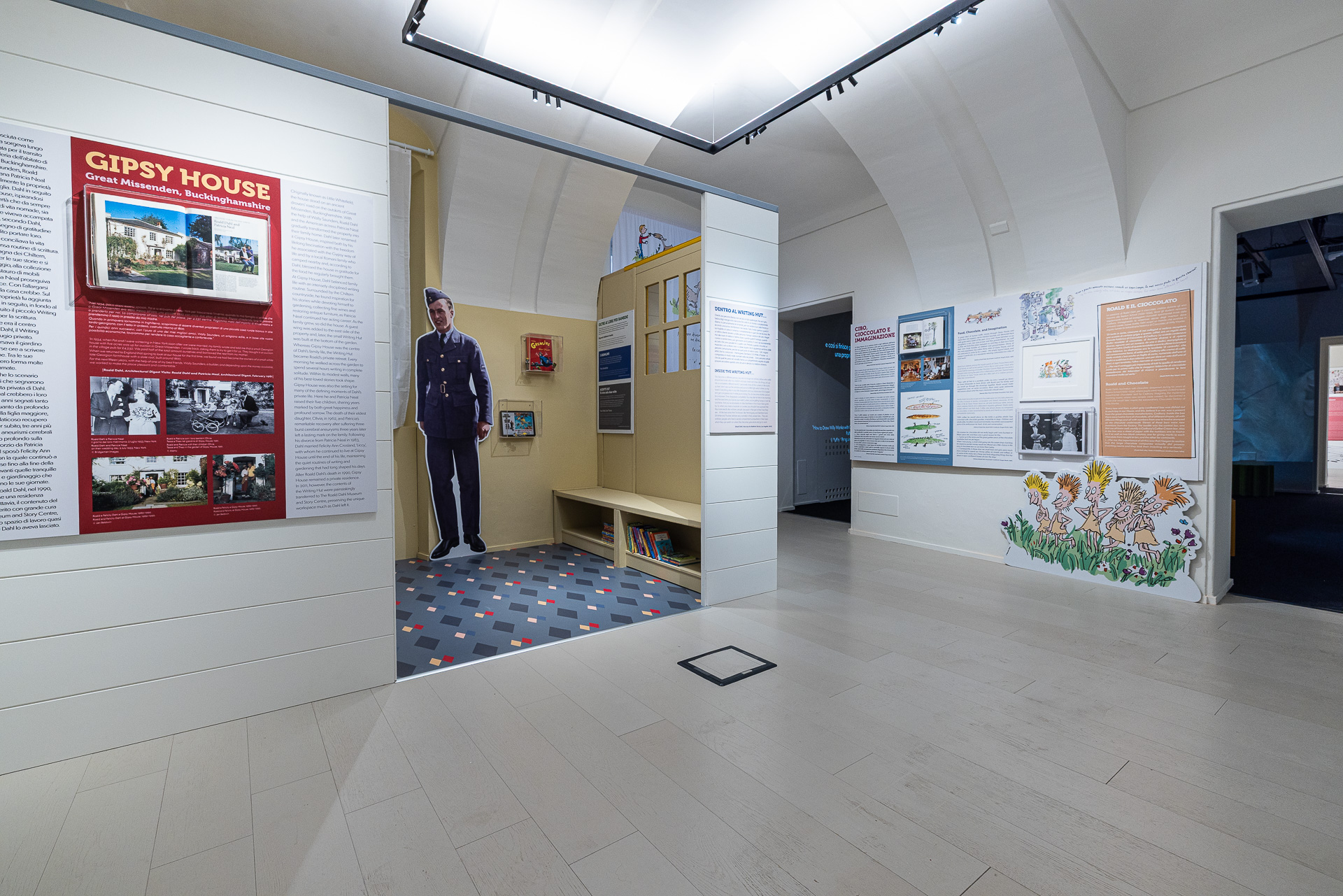
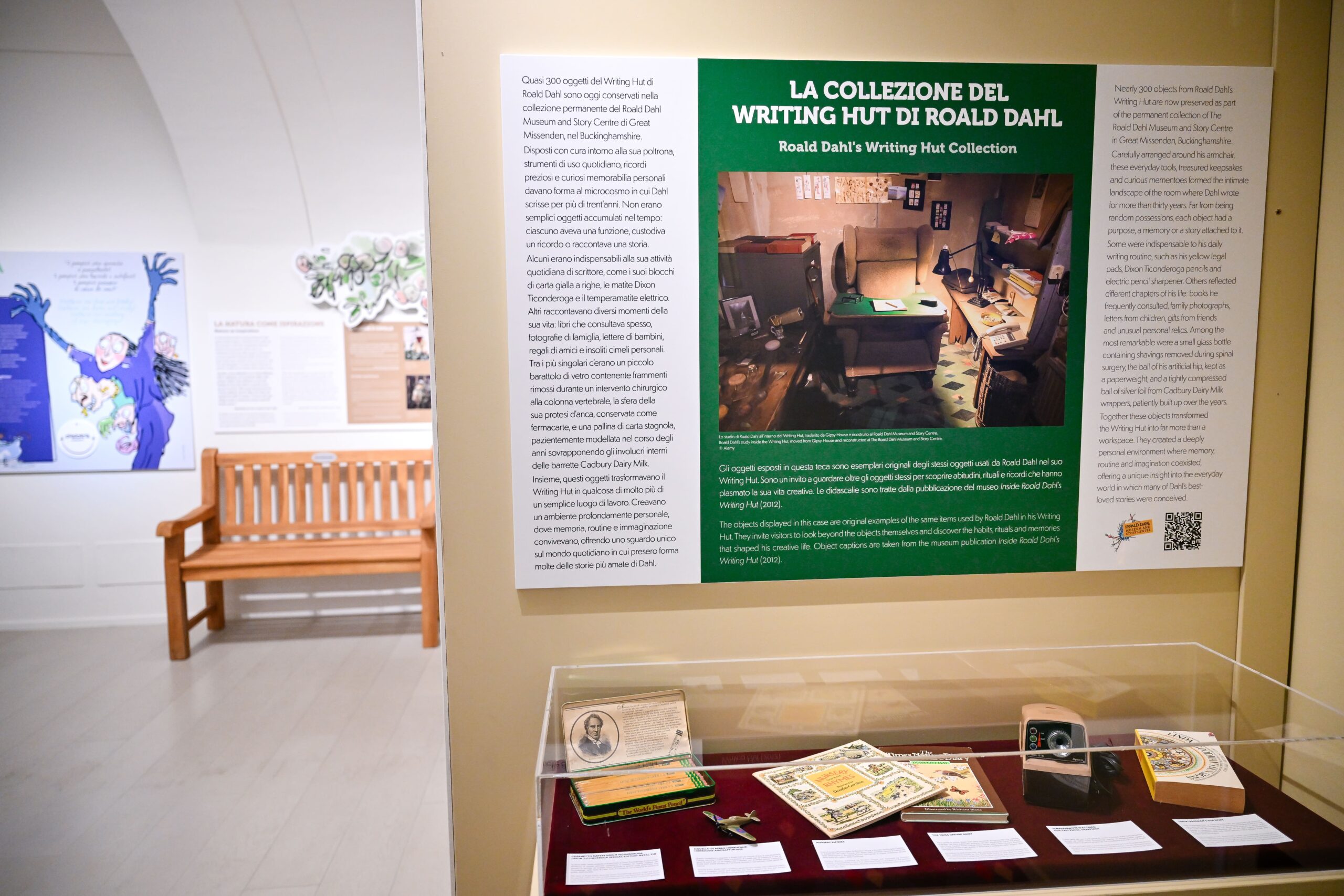
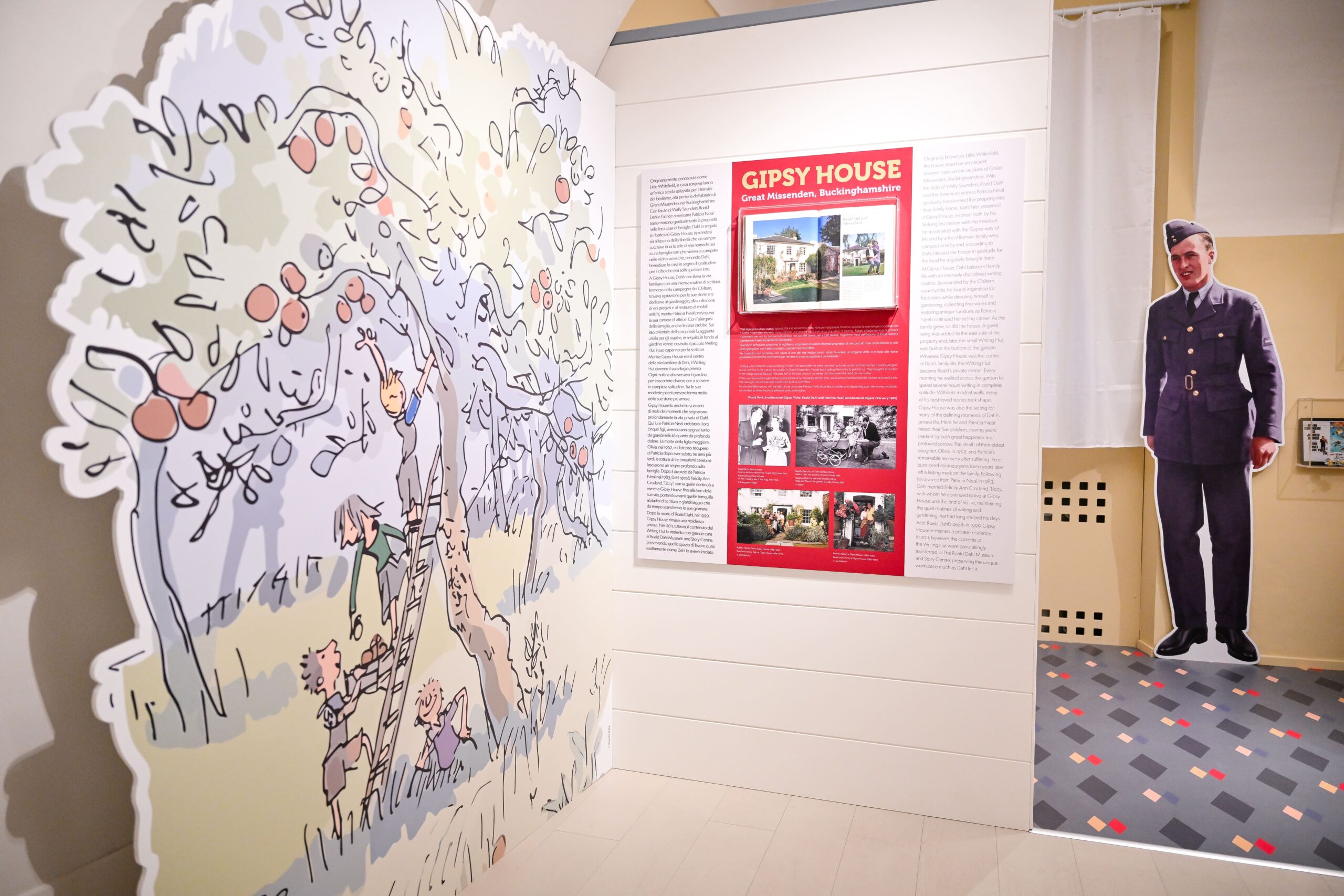
The room brings together texts, images and objects dedicated to these aspects of his life. On one side of the room is a simple reconstruction of the Writing Hut, the small study in the garden of Gipsy House where Dahl worked for more than thirty years.
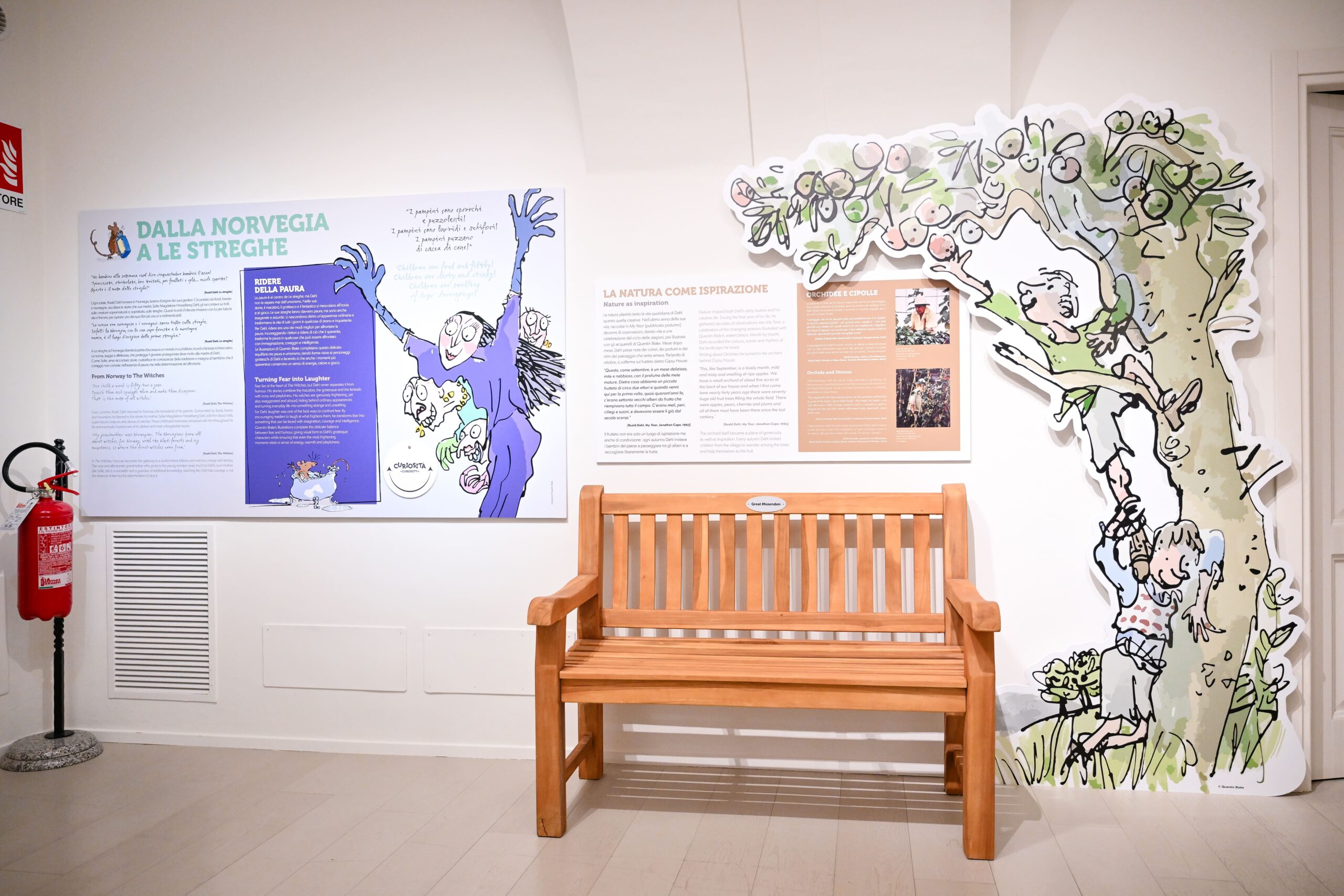
Around the reconstruction are some of the themes that recur throughout his life and work: nature, food and chocolate, his Norwegian origins, and the relationship between reality and imagination.
Inside the Writing Hut
For Dahl, entering the Writing Hut meant leaving the everyday world behind and immersing himself completely in writing.
With the curtains closed and a small light switched on over the table, he remained alone with the paper and the story he was inventing. He could begin working in the morning and realise only many hours later that it was lunchtime.
The Writing Hut was therefore much more than a place of work. It was a space of isolation and concentration, where Dahl could devote himself freely to his imagination.
Nature as inspiration
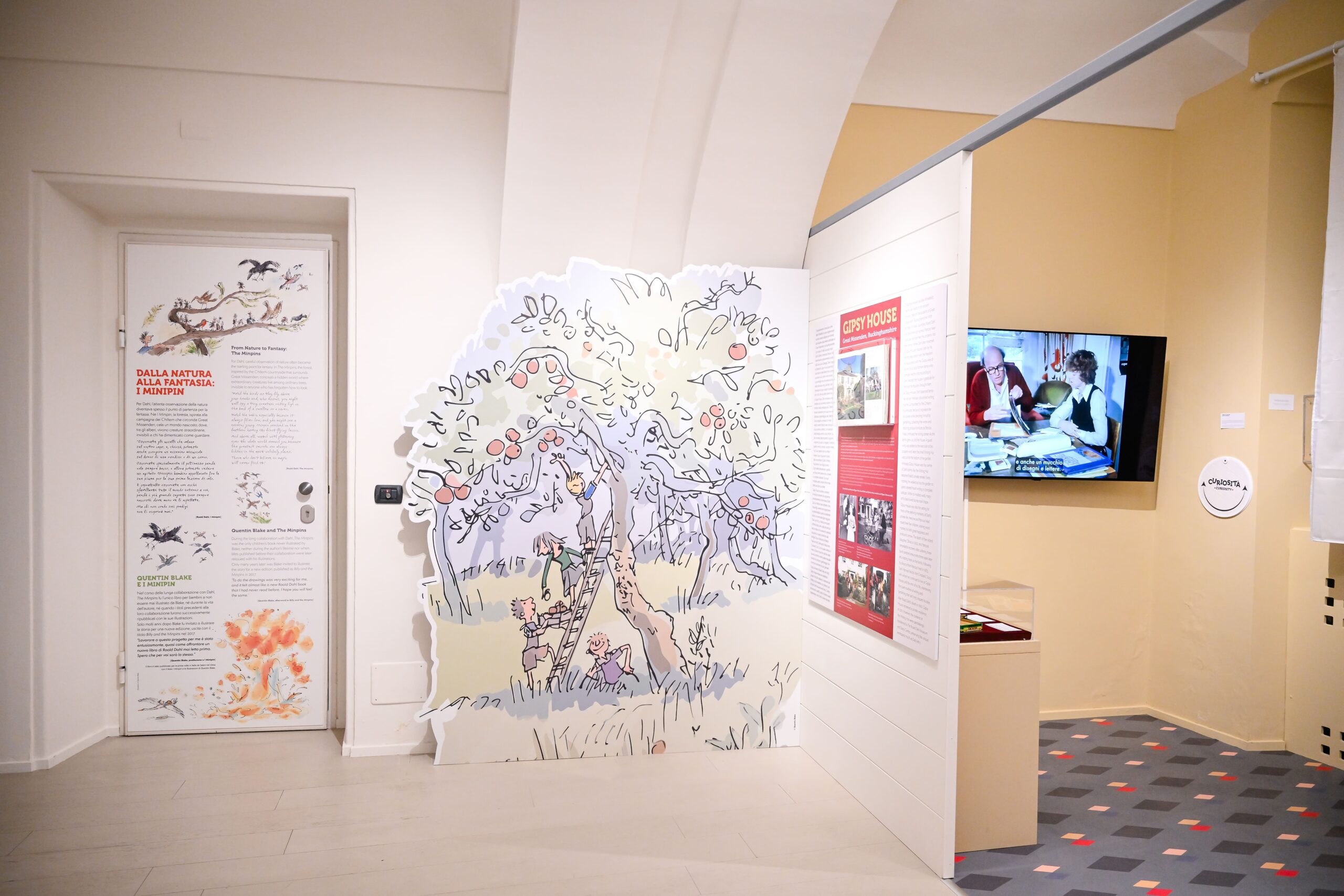
The countryside around Gipsy House was a constant source of observation and inspiration for Dahl.
He loved nature and the garden and devoted great attention to his plants, particularly his orchids and vegetable garden.
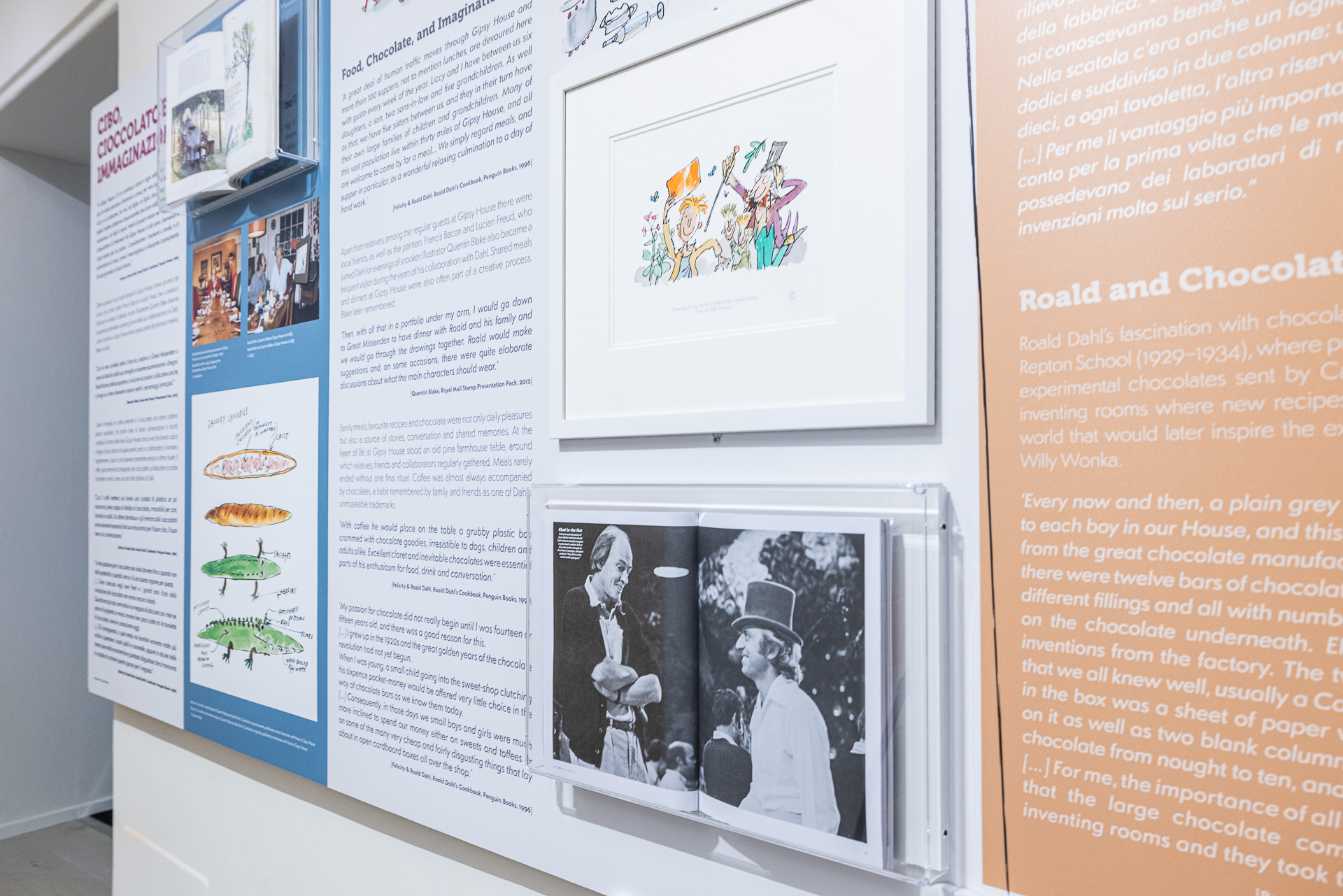
Food, Chocolate and Imagination
Gipsy House was also a meeting place for family, friends and collaborators.
Long, convivial dinners were held around the large rustic dining table in the dining room. Quentin Blake took part in these occasions and brought his illustrations with him, showing them to Dahl to discuss the characters and scenes they were working on.
Food and wine were an important part of these evenings. And chocolate was always present.
Dahl’s passion for chocolate began during his years at Repton School, when students received experimental chocolate bars produced by Cadbury, which they were asked to taste and evaluate.
Dahl was fascinated by the idea of laboratories where new recipes were invented. This experience helped inspire Willy Wonka’s chocolate factory.
From Norway to the Witches
Dahl’s parents were Norwegian, and every summer the writer returned to Norway.
As a child, he listened to his mother’s stories, populated by trolls and supernatural creatures, and in particular by stories about witches.
These stories would later feed Dahl’s imagination and contribute to the creation of The Witches.
The grandmother in the book also owes much to Dahl’s mother: she knows the traditions, tells stories and teaches her grandson to face fear with courage.